Plac Nowy and Its Zapiekanka Stalls: Where Memory and Market Meet
Plac Nowy and its zapiekanka stalls are, for most visitors, simply the best place in Kazimierz to eat late at night. Fewer know that the round building at the square’s centre was once a kosher poultry market central to the Jewish community’s daily life, and that the square itself was known before the war as Plac Żydowski — Jewish Square. The food stalls and the history aren’t separate stories; they’re the same square, used differently across a century.
The Okrąglak — A Market Hall Since 1900
The twelve-sided, near-circular building at the centre of Plac Nowy is called the Okrąglak, literally “the round one,” built in 1900 as a covered market hall with vendor stalls around its perimeter. It wasn’t built for any single purpose beyond general trade, but its role changed sharply in 1927. The building’s survival, largely intact through both the war and the decades of neglect that followed, is itself part of why it could be repurposed so easily once Kazimierz began drawing visitors again in the 1990s.
From Market Hall to Ritual Slaughterhouse
In 1927, the building was leased to Krakow’s Jewish community and converted into a ritual, kosher poultry slaughterhouse, serving the surrounding Jewish quarter. Live poultry, rabbits and pigeons were traditionally sold in the square on set mornings, and the Okrąglak functioned as the practical, unglamorous heart of daily food supply for the neighbourhood — not a tourist attraction of any kind, simply where people bought their dinner.
What Ended in the War
The ritual slaughterhouse was shut down under German occupation, and the square’s role as the centre of Jewish communal life ended with the destruction of the Kazimierz Jewish community during the Holocaust. The building itself survived physically — like much of Kazimierz, it wasn’t destroyed — but its original function did not return afterward.
How Zapiekanka Took Over
The Okrąglak resumed as an ordinary market hall after the war, and zapiekanka — an open-face toasted baguette topped with mushrooms and cheese — emerged during the communist era as cheap, filling street food. It wasn’t until the 1990s that the old hatch-style windows ringing the Okrąglak’s exterior, originally used for butcher and market stalls, were converted into the dozen or so food hatches that now make Plac Nowy the country’s most iconic zapiekanka destination.
The Saturday Flea Market
Merchants still gather around the Okrąglak most days selling produce and general goods, but Saturday is when the square becomes a genuine flea market — antiques, Soviet-era memorabilia, vintage clothing, old cameras and books spread out around the rotunda. It’s one of the better places in Krakow to browse without a fixed shopping list, and pairs naturally with a late-morning food stop.
What to Order and How the Stalls Work
Each hatch runs its own menu and toppings, so it’s worth walking the full loop before committing rather than stopping at the first one — regulars tend to have a specific favourite stall rather than treating them as interchangeable. A classic zapiekanka comes topped with mushrooms, cheese and ketchup, but most stalls now offer dozens of variations. Expect to eat standing or perched on the square’s low walls; there’s no seating built into the food-hatch setup itself.
Plac Nowy After Dark
Since the 1990s, Plac Nowy has become a genuine nightlife hub, ringed by bohemian, slightly eccentric bars — Alchemia, Mleczarnia and others — known for dim lighting, mismatched retro furniture and live jazz or folk music rather than the club-heavy stag-party scene found elsewhere in Krakow. The square is on the tourist trail, but the bars around it still feel closer to a neighbourhood hangout than a manufactured attraction.
Is Plac Nowy Still Authentic?
Compared to the Main Market Square, Plac Nowy has held onto a more lived-in character — locals genuinely use it, not just visitors, and the flea market and zapiekanka stalls both predate the square’s current tourist popularity by decades. It’s not undiscovered by any means, but it hasn’t been hollowed out into a purely tourist-facing space either, which is a meaningfully different thing.
Visiting as Part of a Kazimierz Walk
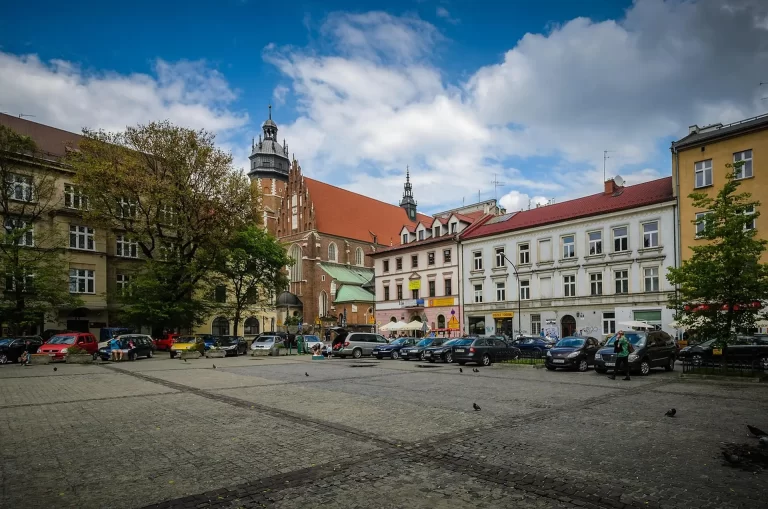
Plac Nowy sits at the natural midpoint of most Kazimierz routes, making it an easy food stop between the synagogues to the north and Corpus Christi Basilica to the south, and it’s covered as a stop in the broader guide to Jewish Krakow and the Kazimierz Quarter. For visitors wanting a guide to explain the square’s history in person rather than reading it on a plaque, a Jewish Krakow walking tour typically includes Plac Nowy as a stop, and a dedicated Kazimierz Jewish Quarter walking tour usually times its route to pass through around a natural food break.
What Locals Notice
Krakow locals who eat at Plac Nowy regularly notice how quickly first-time visitors assume the zapiekanka stalls are the whole story and walk past the Okrąglak itself without registering that it’s a real building with its own history, not just a wall of food hatches. Slowing down enough to notice the twelve-sided structure underneath the signage changes how the square reads — less a food court, more a market hall that’s simply changed what it sells over a century.
Getting There and Best Time to Visit
Plac Nowy is a short walk from Szeroka Street, on the western edge of Kazimierz’s traditional Jewish quarter, and doesn’t require any planning to reach — it’s simply part of walking the district. Daytime visits suit the flea market and a first look at the Okrąglak’s architecture; evenings, particularly Thursday through Saturday, suit the zapiekanka stalls and the bars around the square’s edge, when the atmosphere shifts noticeably from market square to late-night gathering spot.
A Square That Changed What It Feeds People, Not Why They Gather
What’s easy to miss, walking through Plac Nowy today, is how consistent its actual function has been across more than a century — a place where people from the surrounding streets come to buy food and gather, whether that meant kosher poultry in 1927 or a toasted zapiekanka at midnight in 2026. The specifics changed entirely; the underlying role of the square in daily life around it arguably hasn’t.
Vegetarian and Dietary Options
Most zapiekanka stalls around the Okrąglak now offer vegetarian toppings as standard rather than an afterthought — mushroom and cheese remains the classic base, with options to add vegetables, different cheeses or spicier toppings depending on the stall. Vegan versions exist at a handful of hatches but aren’t universal, so it’s worth asking directly rather than assuming, since menus and toppings vary hatch to hatch without much consistency across the square.
Combining Plac Nowy With the Rest of Kazimierz
Most visitors treat Plac Nowy as a midpoint stop rather than a destination in itself, arriving from Szeroka Street’s synagogues and continuing toward the Galicia Jewish Museum or Corpus Christi Basilica afterward. That sequencing works well precisely because the square rewards a pause rather than a rushed pass-through — sitting with food for twenty minutes does more for understanding the atmosphere of Kazimierz than another synagogue visit squeezed into the same stretch of time.
Prices and Payment
Zapiekanka remains genuinely cheap by Western European standards, typically a fraction of the price of a sit-down meal on the Main Market Square, which is part of why it has stayed a student and late-night staple rather than becoming a purely tourist-priced novelty. Most stalls accept cards now, though carrying some cash is still sensible for the smaller vendors and the Saturday flea market, where card readers are far less consistently available.
What to Read Next
- Jewish Krakow and the Kazimierz Quarter: Heritage, Synagogues and Tours
- Jewish Krakow Walking Tour: What You See, Learn and Where It Goes
Frequently Asked Questions
What is the round building at Plac Nowy called?
It is called the Okrąglak, a twelve-sided market hall built in 1900. From 1927 it operated as a ritual kosher poultry slaughterhouse serving Kazimierz’s Jewish community, until it was shut down during German occupation.
When did Plac Nowy become known for zapiekanka?
Zapiekanka emerged as cheap street food during the communist era, but Plac Nowy’s food hatches, converted from the Okrąglak’s old market-stall windows, only appeared in the 1990s.
What day is the Plac Nowy flea market?
Merchants sell general goods most days, but the well-known flea market with antiques, vintage clothing and Soviet-era memorabilia specifically happens on Saturdays.
Was Plac Nowy known by a different name before the war?
Yes, it was known as Plac Żydowski, or Jewish Square, reflecting its role as the main marketplace of Kazimierz’s Jewish quarter before the Holocaust.
Is Plac Nowy touristy or still a local spot?
It is on the tourist trail but retains a more lived-in, local character than Krakow’s Main Market Square — both the flea market and the food stalls predate the square’s current popularity with visitors.
Plan your visit: Google Maps