What the Wieliczka Salt Mine Tour Is Actually Like, Chamber by Chamber
What the Wieliczka Salt Mine tour is actually like, chamber by chamber, is hard to picture from a brochure description alone, so this walks through the standard Tourist Route roughly in the order you’ll experience it, from the entrance shaft to the final exit.
Going Down: The Daniłowicz Shaft
The visit starts with a descent down a wooden spiral staircase inside the Daniłowicz Shaft — roughly 380 steps down, taking about 10-15 minutes at a steady pace. It’s the only sustained physical demand of the entire visit; everything after this point is walking on mostly level or gently sloped ground between chambers. The staircase itself is narrow and enclosed, giving an immediate sense of descending into genuinely old mining infrastructure rather than a purpose-built visitor attraction.
The staircase spirals tightly enough that groups naturally spread out into a single-file rhythm, and the temperature noticeably drops as you descend — by the bottom, you’re in the mine’s constant 14-16°C environment regardless of the season outside. Guides typically pause briefly at the bottom to regroup before starting the walking portion, which gives a moment to adjust to the underground setting before the tour properly begins.
The Early Chambers: Copernicus and Casimir the Great
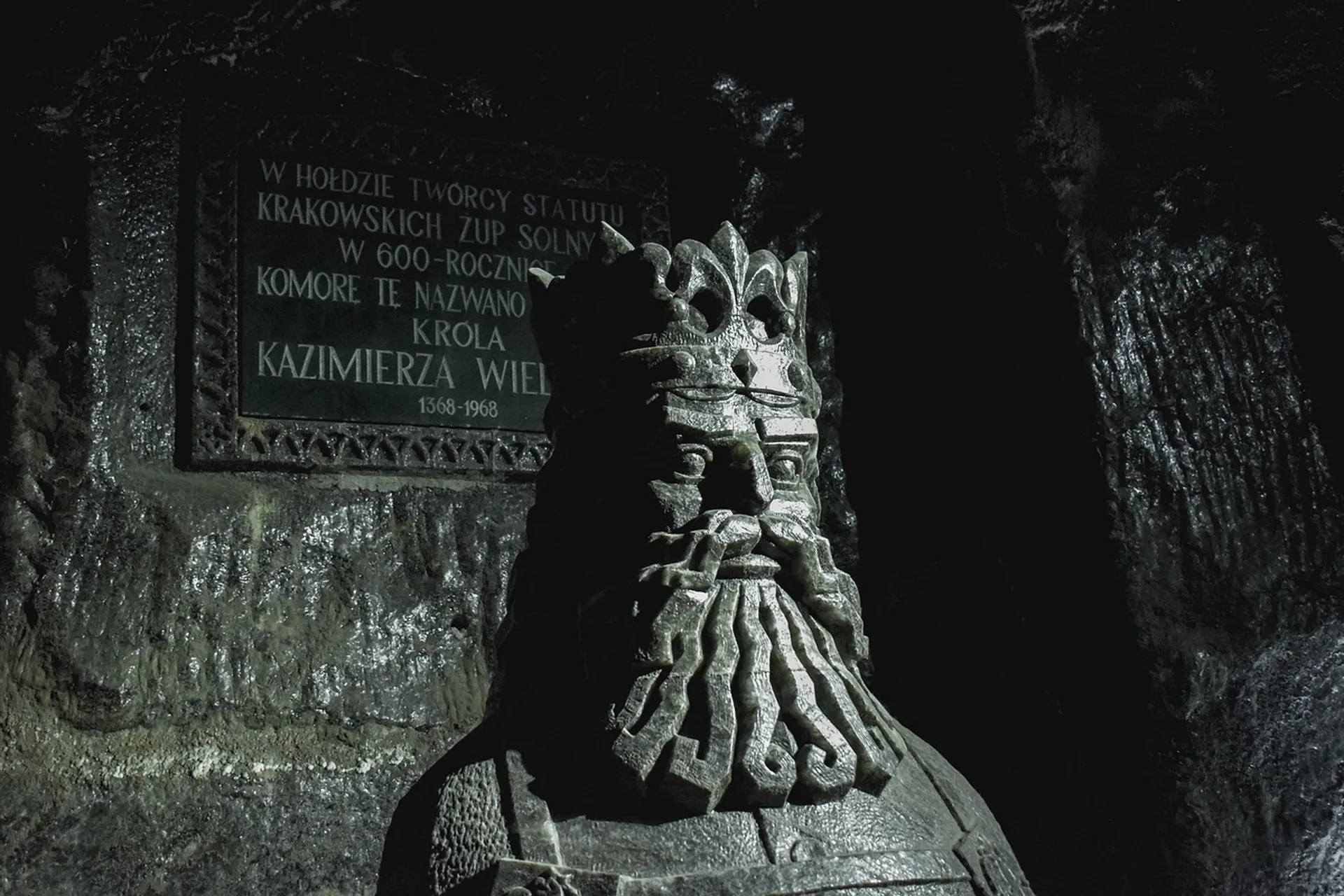
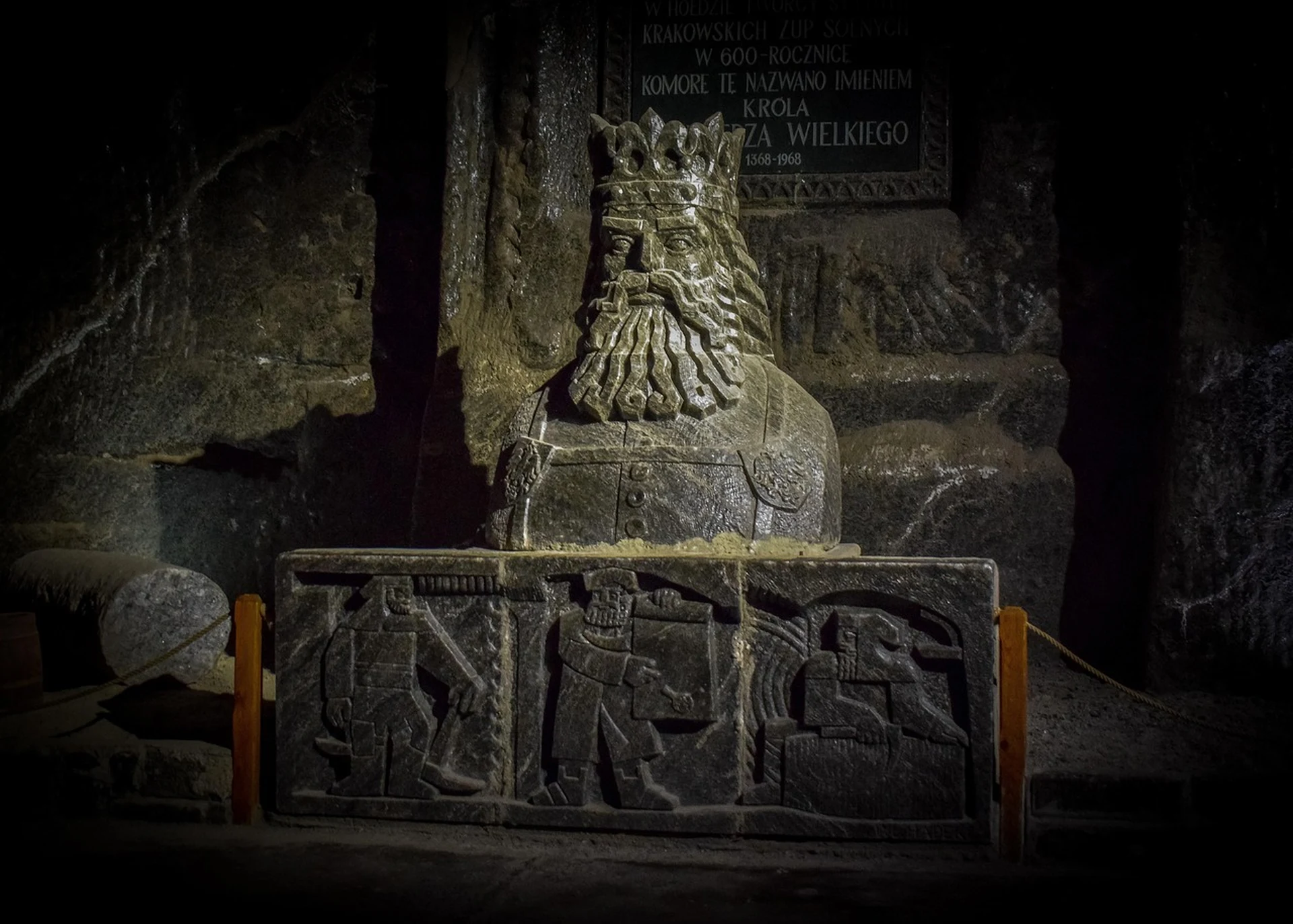
The first chambers on the route include one honoring Nicolaus Copernicus, who is recorded as having visited the mine in the 15th century, marked with a salt sculpture and informational panels. Nearby, the Casimir the Great Chamber references the king who granted Wieliczka its mining charter and regulations in the 14th century, effectively formalizing an industry that predates his reign. These early stops set up the mine’s long institutional history before the route moves into its more visually dramatic sections.
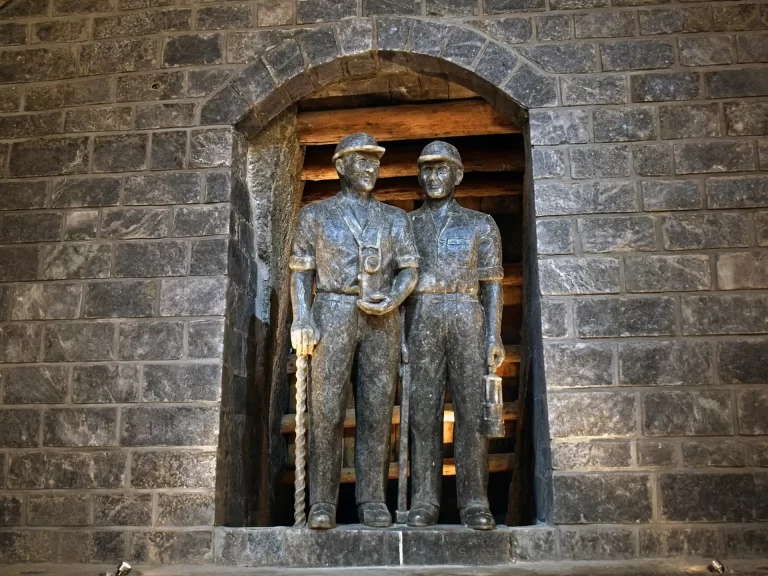
These early chambers also introduce the mine’s engineering story more directly than the later, more decorative sections — wooden support beams, some centuries old, are visible overhead, and guides typically explain how miners historically managed structural stability in salt, which behaves differently under pressure than rock. It’s a useful grounding in the practical reality of the mine before the tour shifts toward its more artistic sections.
The Legend of Princess Kinga
Several chambers reference the legend of Princess Kinga, a Hungarian princess who, according to Polish folklore, threw her engagement ring into a Hungarian salt mine before traveling to Poland, only for the ring to later be discovered inside a block of Wieliczka salt — explaining, in the legend’s logic, why Poland has salt at all. It’s a foundational story for the mine’s identity, referenced repeatedly through statues and reliefs along the route, and it sets up the significance of the chapel dedicated to her name later in the tour.
Whether or not you find the legend itself compelling, it’s worth knowing before reaching the chapel, since Kinga (later canonized as Saint Kinga) is the reason the chapel bears her name, and several of the carved reliefs throughout the mine reference episodes from her story specifically. Guides generally tell an abbreviated version of the legend at one of these earlier stops, which makes the chapel’s dedication make sense rather than feeling like an arbitrary naming choice.
The Chapel of St. Kinga: The Main Event
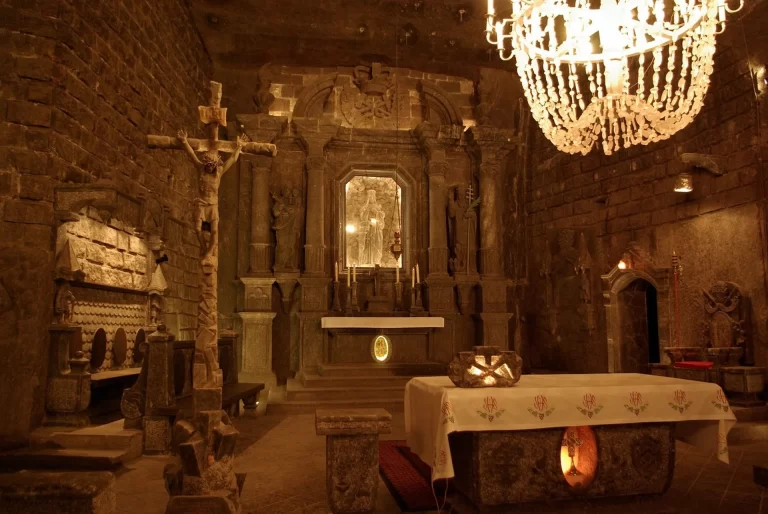
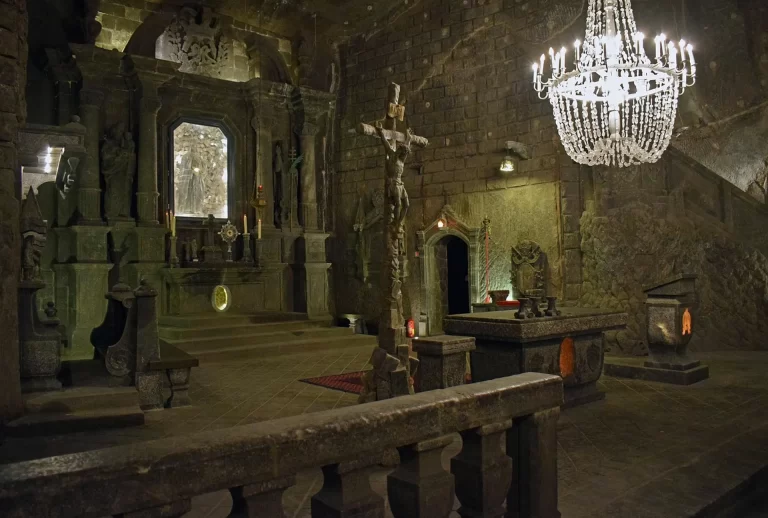
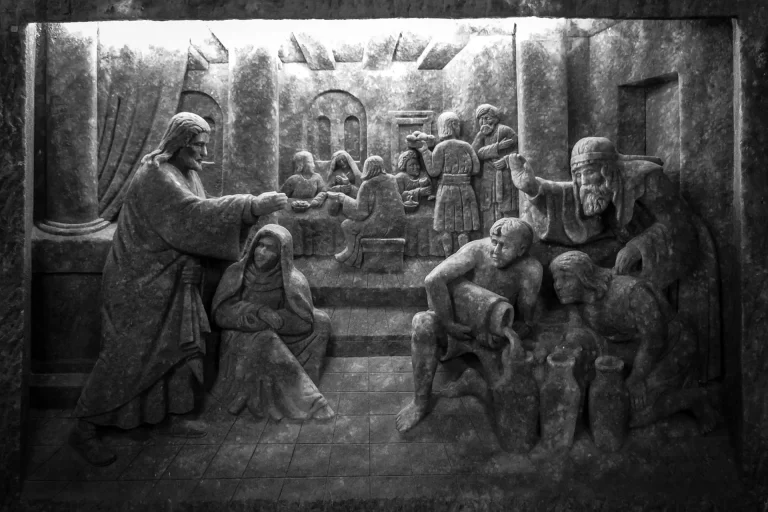
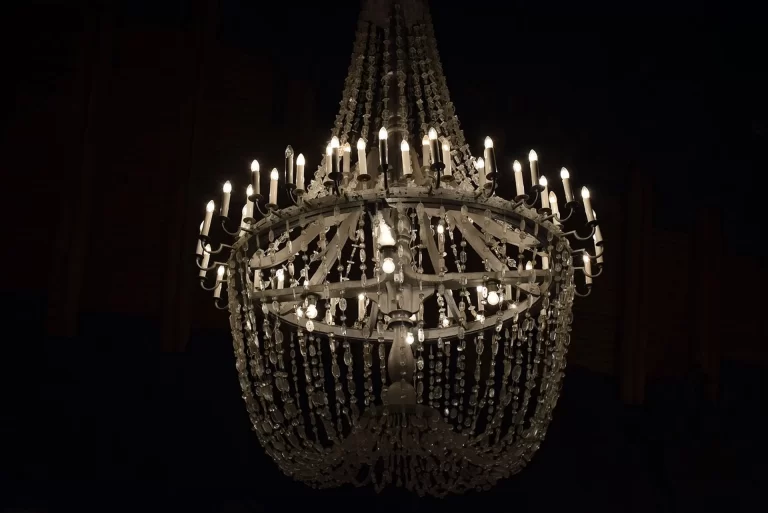
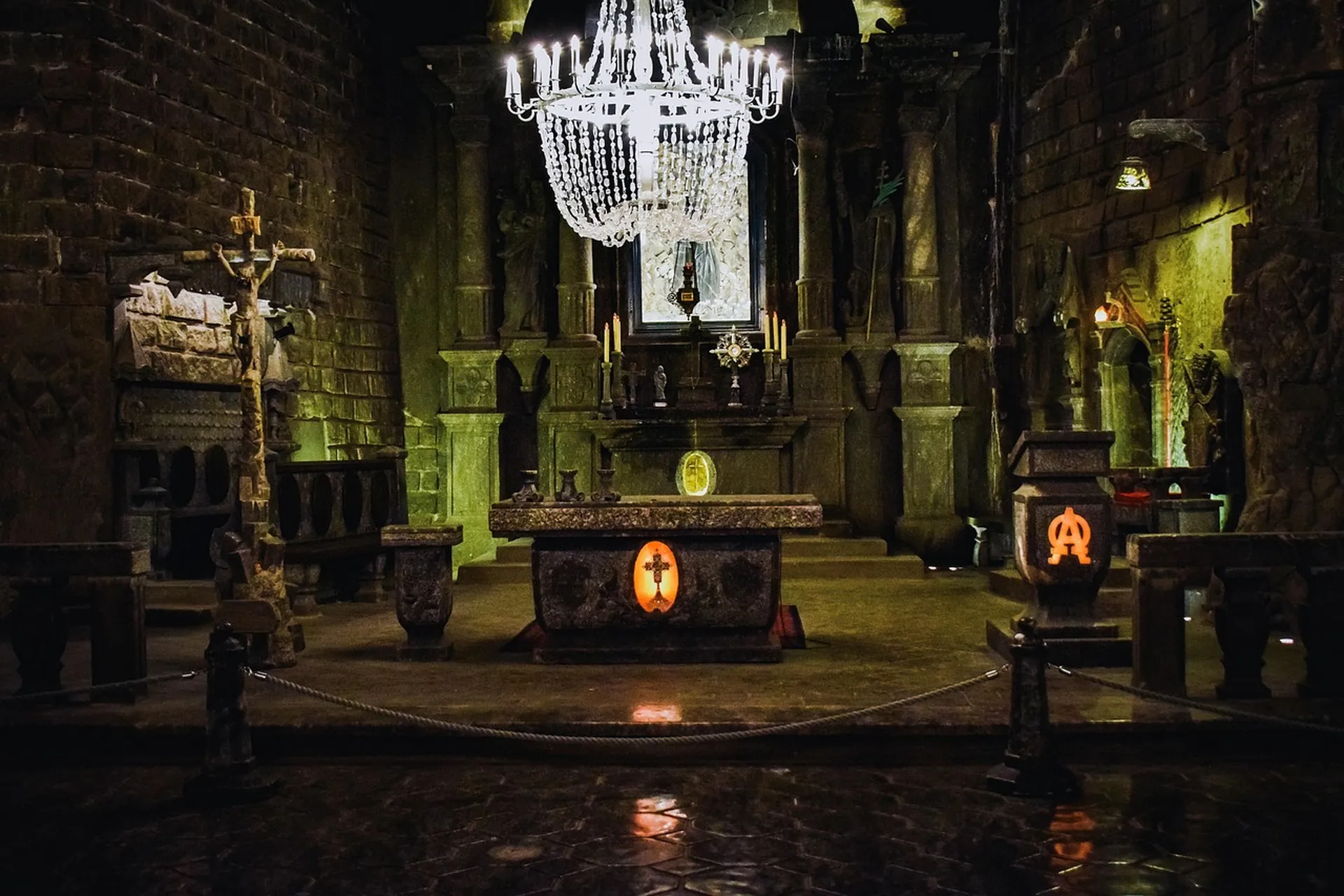
The Chapel of St. Kinga is the tour’s clear highlight — a full underground church carved entirely from salt over more than 60 years by miner-sculptors, complete with salt chandeliers (crystallized salt dissolved and reformed into clear crystal form), relief carvings depicting biblical scenes including a version of the Last Supper, and a floor patterned to resemble tile. It’s large enough to hold several hundred people and is still used for special ceremonies, including weddings, on occasion. Visitors typically spend more time here than in any other single chamber, and it’s worth doing so — the detail rewards a slow look rather than a quick pass-through.
The scale is genuinely difficult to appreciate from photos — the chapel measures roughly 54 meters long and reaches about 12 meters at its highest point, all carved from the surrounding salt deposit rather than built from separate materials. The chandeliers in particular surprise most visitors, since salt crystals dissolved in water and allowed to recrystallize produce something visually indistinguishable from cut glass, a detail guides usually point out specifically because it’s easy to assume they’re conventional glass fixtures at first glance.
Beyond the Chapel: Erazm Baraczu and the Lakes
Past the chapel, the route continues through the Erazm Baraczu Chamber and toward one of the mine’s underground lakes — brine-saturated water pools with a distinctive greenish color from dissolved salt and mineral content, lit to dramatic effect. These chambers feel noticeably different from the chapel’s carved formality: quieter, more atmospheric, with the water adding both visual interest and a sense of the mine’s ongoing relationship with groundwater that miners had to manage throughout its working history.
Historically, flooding from underground brine was one of the mine’s most persistent operational hazards, and the lakes visitors see today are a controlled, safe remnant of that same water system rather than a purely decorative feature. Some sections of the mine were lost to flooding entirely over its centuries of operation, which is part of why the Tourist Route represents only a fraction of the mine’s total historical extent — much of it remains inaccessible or unstable.
The Warsaw Chamber and the Final Stretch
One of the largest chambers on the route, sometimes used for concerts and events aboveground-style despite being underground, marks a shift toward the end of the tour. From here, the route moves toward the exit infrastructure — a modern fast elevator (the Regis Shaft) that returns visitors to the surface in under a minute, a dramatic contrast to the slow spiral descent that started the visit. A gift shop and small café sit near the exit for visitors who want a break before heading back up.
The acoustics in this large hall are notably good, which is part of why it hosts occasional concerts and events despite being over 100 meters underground — a detail that surprises most visitors who assume an old mine chamber would sound muffled or echoey rather than clear. It’s also one of the few points on the route with enough open floor space to fully appreciate the scale of the excavation from a single vantage point.
What the Tour Doesn’t Show You
The Tourist Route covers roughly 2% of the mine’s total length, which runs to over 300km of corridors and chambers across nine levels reaching depths of over 300 meters — the visitor route stays entirely within the first three levels, down to about 135 meters. The rest remains a working museum and research site rather than a visitor space, partly for safety and structural reasons and partly because much of it holds less visual interest than the curated highlights on the standard route.
Knowing this scale beforehand helps set realistic expectations — the Tourist Route is a carefully curated highlight reel of a much larger, mostly inaccessible complex, not a comprehensive survey of everything the mine contains. That’s part of what the Miners’ Route attempts to address, by giving access to a small additional slice of the working mine beyond the standard highlights, though even that route only adds a modest amount of extra territory relative to the mine’s true scale.
What Locals Notice
Krakow-based guides — locals who lead this route regularly — say the chapel is where visitor energy visibly shifts — conversations quiet down, phones come out for photos rather than messaging, and groups that were moving briskly through the earlier chambers slow down considerably. It’s one of the more reliable “everyone reacts the same way” moments on any Krakow-area tour, regardless of how much visitors knew about the mine going in.
See the Wieliczka Salt Mine Tour and Fast-Track Ticket
What to Read Next
- Wieliczka Salt Mine from Krakow: Tours, Tickets and the Underground Route
- Wieliczka Salt Mine Tour from Krakow: How to Book the Right Ticket
- Wieliczka Tourist Route vs Miners’ Route: Which Is Right for You
- Wieliczka Salt Mine and Auschwitz in One Day: Does It Actually Work?
Frequently Asked Questions
What is the highlight of the Wieliczka Salt Mine tour?
The Chapel of St. Kinga — a full underground church carved entirely from salt, including chandeliers and relief carvings — is the tour’s clear highlight and where most visitors spend the most time.
How many steps do you walk down at Wieliczka?
Roughly 380 steps down a wooden spiral staircase at the start of the tour. There are no stairs back up — visitors exit via a fast elevator.
Is the Wieliczka Salt Mine tour mostly walking?
Yes — after the initial descent, the route is mostly level or gently sloped walking between chambers over roughly 3.5km.
How long does the Wieliczka Tourist Route take?
About 2-3 hours, covering roughly 20 chambers including the Chapel of St. Kinga and the underground lakes.
Plan your visit: Official site · Google Maps