Wieliczka Salt Mine from Krakow: Tours, Tickets and the Underground Route
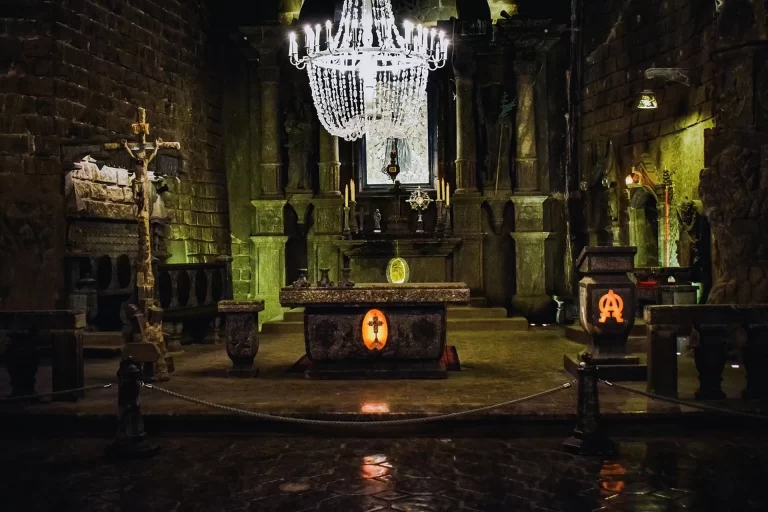
Wieliczka Salt Mine sits about 15 kilometres southeast of Krakow, and it is one of the few day trips near the city that consistently earns its reputation rather than just riding on it. Nine centuries of continuous salt mining carved out over 300 kilometres of tunnels, and the small section open to visitors includes underground chapels, a chandelier-lit cathedral chamber, and a saline lake — all cut entirely from rock salt by hand. This guide covers how the visit actually works: which ticket to book, what the tourist route includes, how it compares to pairing the mine with Auschwitz, and what a Krakow local would actually tell you before you go.
What Wieliczka Salt Mine Actually Is
The mine operated continuously from the 13th century until 1996, when the last working sections closed for tourism and conservation reasons rather than because the salt ran out. What remains today is a UNESCO World Heritage Site — one of the original twelve sites listed in 1978 — and a working museum rather than a decommissioned hole in the ground. Salt was one of medieval Poland’s most valuable exports, and the mine’s scale reflects that: it funded a significant share of the royal treasury for centuries.
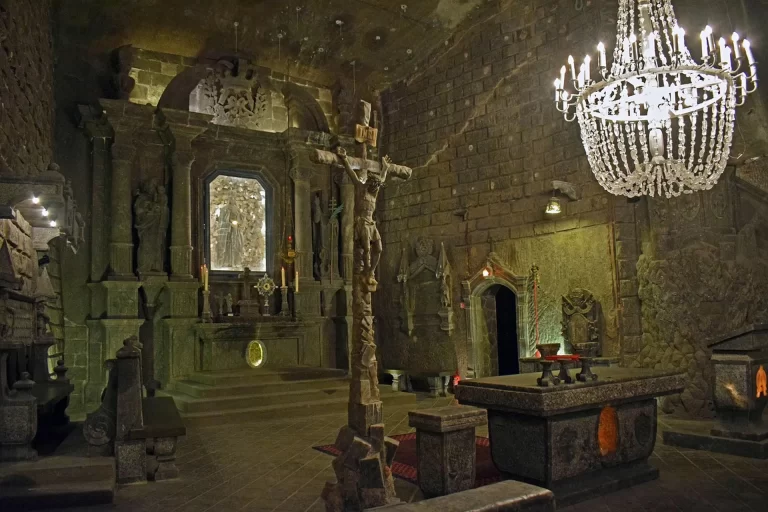
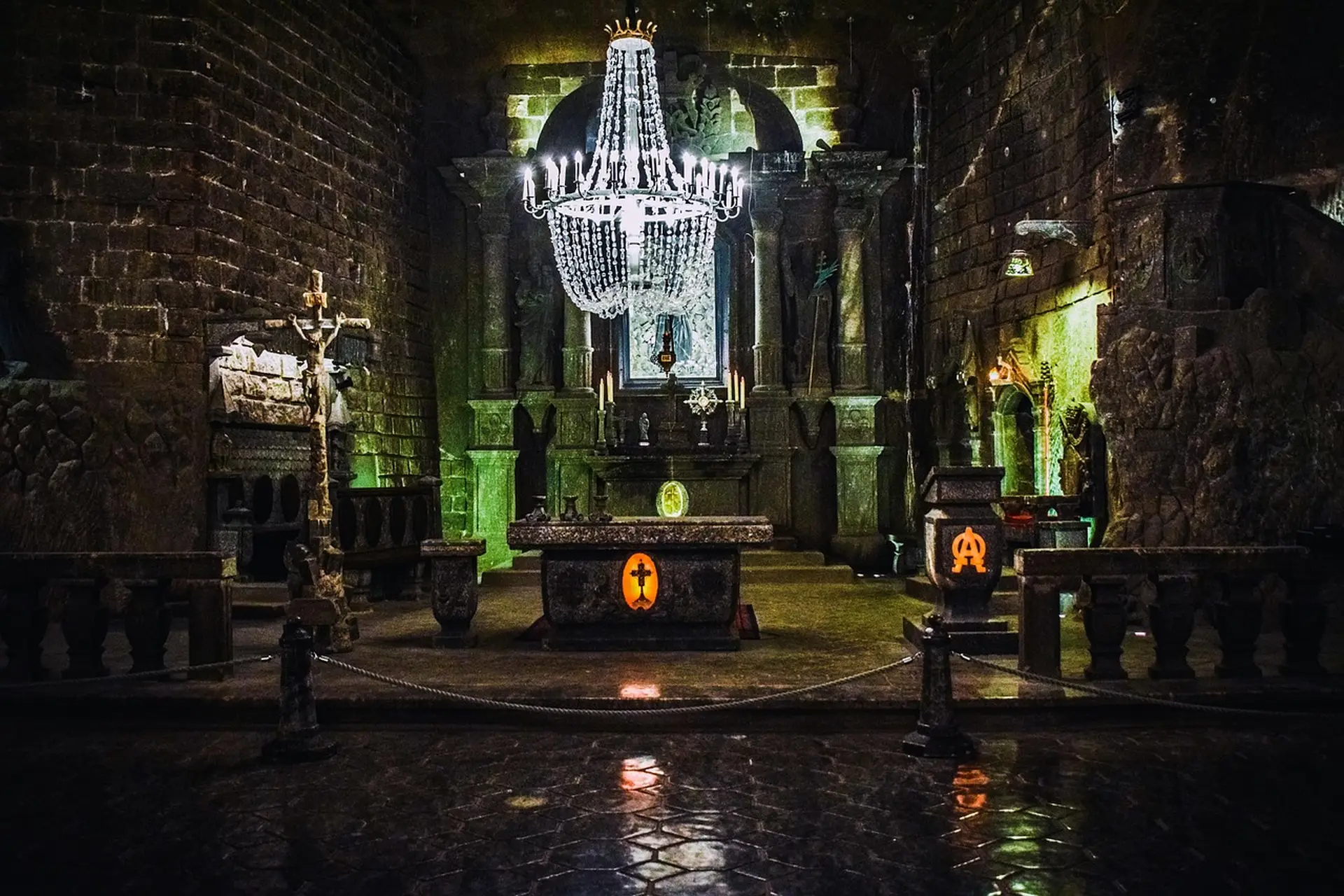
The tourist route covers roughly 2 to 3 kilometres of the upper levels, descending to about 135 metres below the surface at its lowest accessible point. Along the way, chambers carved by generations of miners have been shaped into chapels, sculptures, and one enormous underground cathedral — the Chapel of St. Kinga — where even the chandeliers are made from dissolved and recrystallized salt.
The salt itself is what geologists call rock salt, deposited roughly 13 million years ago when a shallow sea covered much of what is now southern Poland. That geological detail explains why the walls, floors, and even the chandeliers along the route aren’t painted or carved from imported stone — every grey-white surface visitors touch is the same mineral, formed the same way, over the same span of deep time.
The Chapel of St. Kinga and Other Highlights
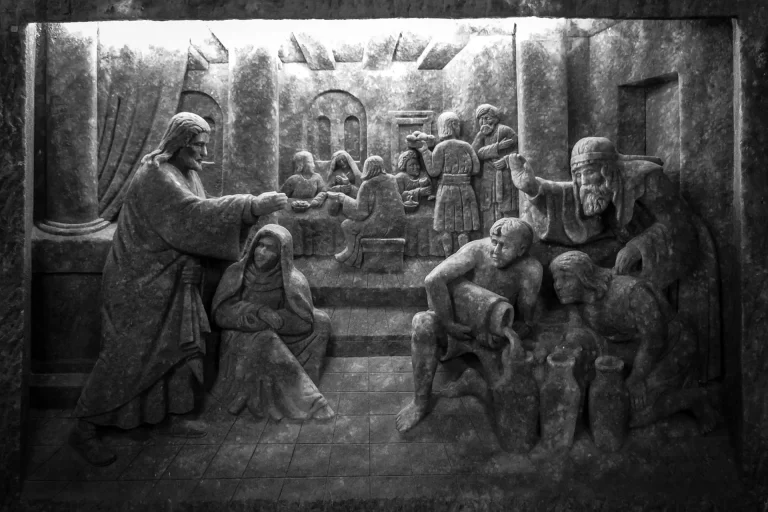
The Chapel of St. Kinga is the mine’s centrepiece and the reason most photographs of Wieliczka look the way they do. It’s a full underground church — roughly 54 metres long and 12 metres high — carved entirely from salt over more than 60 years by three generations of miner-sculptors. Reliefs on the walls depict biblical scenes, the floor is patterned like tile despite being solid salt, and services are still occasionally held there, including weddings.
Beyond the chapel, the route passes the Saxony Chamber with its dramatic lighting, several statues of historical figures (including a memorable one of Copernicus, who is believed to have visited the mine), and the underground saline lake in the Erazm Baraczy Chamber — its still, dark surface is one of the more atmospheric stops on the walk.
It’s worth noting that the chapel took over 66 years to complete, spanning the working lives of three sculptors — Józef Markowski, and later Tomasz and Antoni Wyrodek — which is part of why locals describe it less as a tourist attraction and more as a genuine devotional monument that happens to be open to visitors.
Tourist Route vs Miners’ Route
Most visitors take the Tourist Route, a fixed walking path covering the mine’s best-known chambers with a guide, finishing at a museum floor and a lift back to the surface. It takes about two to three hours and involves roughly 800 steps down (no stairs back up — a fast lift handles that).
The Miners’ Route is a separate, more hands-on experience aimed at visitors who want an activity rather than a walking tour: it involves protective overalls, gas-lamp equipment, and simulated mining tasks, and runs as a distinct booking from the standard tourist ticket. It’s a good option for older kids or anyone who’s already done the standard route once, but it is not a substitute for the Tourist Route on a first visit — the two see largely different parts of the mine.
One detail that surprises first-time visitors: neither route lets you explore independently once inside. Every visitor, regardless of ticket type, moves through the mine as part of a guided group — a safety requirement given the scale and age of the tunnels, not a marketing choice. Booking ahead mainly affects how long you wait before joining a group and whether that group speaks your language, not whether you’ll have a guide at all.
Wieliczka Salt Mine Tour from Krakow: Ticket Options
| Ticket Type | What’s Included | Best For |
|---|---|---|
| Guided Tour & Fast-Track Ticket | Transport, skip-the-line entry, English-speaking guide, Tourist Route | Most visitors — simplest, no logistics to manage |
| Guided Tour with Pickup | Hotel pickup/drop-off, transport, guide, Tourist Route | Travellers without easy access to public transport |
| Independent Entry (no tour) | Self-arranged transport, timed entry ticket only, mandatory on-site guide included by the mine itself | Budget travellers comfortable arranging their own transport |
| Miners’ Route | Separate ticket, hands-on mining activity, protective gear | Repeat visitors or families wanting something more active |
For most visitors coming from central Krakow without a rental car, the simplest option is a tour that bundles transport with a fast-track ticket — see current availability for the top-rated Wieliczka tour with fast-track entry here. It removes the two logistics that trip people up most: getting to Wieliczka on your own, and the mine’s timed-entry system, which can mean a long wait without a pre-booked slot.
How Wieliczka Compares to an Independent Visit
It is possible to visit Wieliczka independently — book a timed entry slot directly through the mine’s own site, take a minibus or train from Krakow, and join the mandatory guide once inside (solo underground exploration isn’t permitted for safety reasons, tour or no tour). Locals who’ve done both routes tend to say the savings are modest once you account for the time spent figuring out timed-entry slots and connecting transport, especially in peak season when independent slots sell out days ahead. A booked tour costs more but removes nearly all of the planning; independent entry costs less but asks you to do a bit of homework and hold your travel dates loosely.
If flexibility and hotel pickup matter more to you than the lowest price, the guided tour with pickup option is worth checking for current pricing and pickup zones — it’s a small-group alternative to the standard fast-track ticket and includes door-to-door transport.
How Long the Visit Takes and What to Wear
Budget two to three hours for the standard Tourist Route, plus roughly 45 minutes to an hour each way for transport from central Krakow. The mine maintains a constant temperature of around 14°C (57°F) year-round regardless of the season outside, so a light jacket or layer is worth carrying even in summer.
The walking route involves around 800 steps down through the mine’s upper levels — no stairs are required on the way back up, since the exit lift handles that — but the descent alone rules out the mine for visitors who use wheelchairs or have significant mobility limitations. Comfortable flat shoes make a real difference; the passageways are uneven in places and some sections have low ceilings.
Combining Wieliczka with Auschwitz: Does It Work?
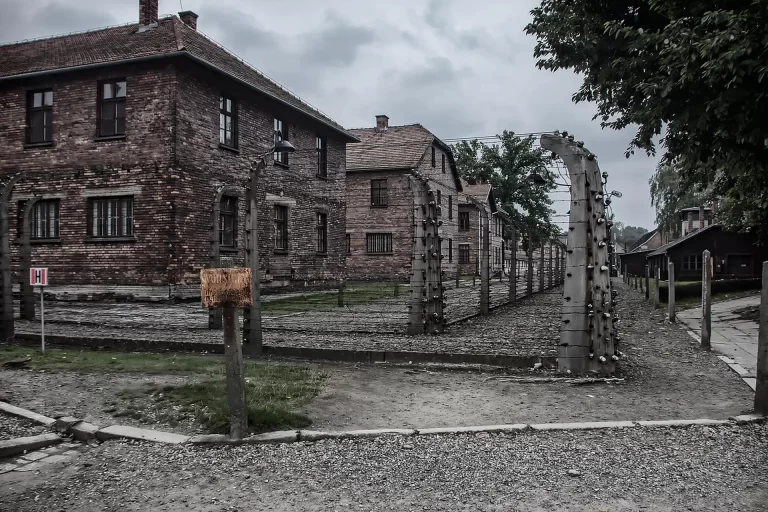
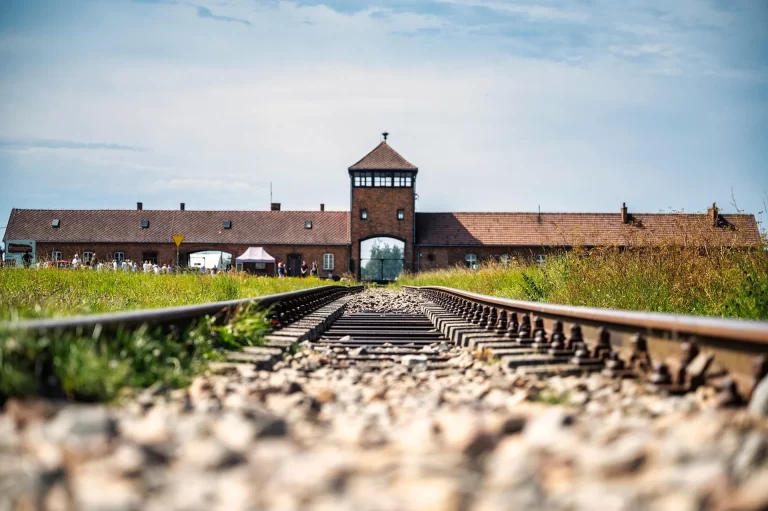
Auschwitz-Birkenau and Wieliczka are sometimes bundled into a single-day combo tour, and it is physically possible to do both in one day — but Marta’s honest read is that it is a heavy day, not a relaxed one. Auschwitz alone runs 3.5 to 6 hours depending on the tour, and pairing it with a 2 to 3 hour underground visit on the same day leaves little room to actually process either site. If your schedule allows a second day in the Krakow area, splitting them is worth the extra day for most visitors — the tone of an Auschwitz visit and the tone of a Wieliczka visit are different enough that back-to-back scheduling can shortchange both.
Wieliczka Salt Mine with Kids and Families
The mine tends to work well for families with children roughly seven and up — the underground chambers, statues, and the saline lake generally hold kids’ attention better than a typical museum visit would. Strollers are not practical on the Tourist Route given the stairs and uneven flooring; a baby carrier is the better option for the youngest visitors. The Miners’ Route, with its hands-on tasks, is often the more memorable pick for kids who’ve already seen the standard chambers once.
A practical note for families: the underground temperature and the length of the walk mean younger children can tire faster than adults expect, even though the route itself isn’t physically demanding. Bringing water and planning for a slower pace than a typical museum visit tends to make the difference between kids finding the mine memorable and finding it simply long.
Getting to Wieliczka from Krakow
A regional train (Koleje Małopolskie, the “Wieliczka Rynek-Kopalnia” line) runs from Krakow Główny and takes about 20 minutes, dropping close to the mine entrance. Minibuses (marked “Wieliczka”) also run from near the city centre for a similar journey time. Both are inexpensive and straightforward for anyone comfortable navigating public transport in a language they don’t speak — station and stop names are posted, and the routes are short enough that getting lost is unlikely. For anyone who’d rather not manage the logistics, a tour that includes transport removes this step entirely.
Taxis and rideshare apps are also an option and take roughly 20-25 minutes each way depending on traffic — a reasonable middle ground between the train’s low cost and a tour’s zero-logistics convenience, particularly for early-morning departures before the trains are running as frequently.
Best Time of Day to Visit
Locals who’ve taken visiting family to Wieliczka more than once tend to recommend the first tour slots of the day, generally before 10am — tour groups build through the late morning, and by early afternoon the narrower passageways and the Chapel of St. Kinga in particular can feel genuinely crowded rather than atmospheric. Weekday visits are calmer than weekends, when the mine draws day-trippers from other Polish cities in addition to international visitors.
A Short History of Wieliczka’s Miners
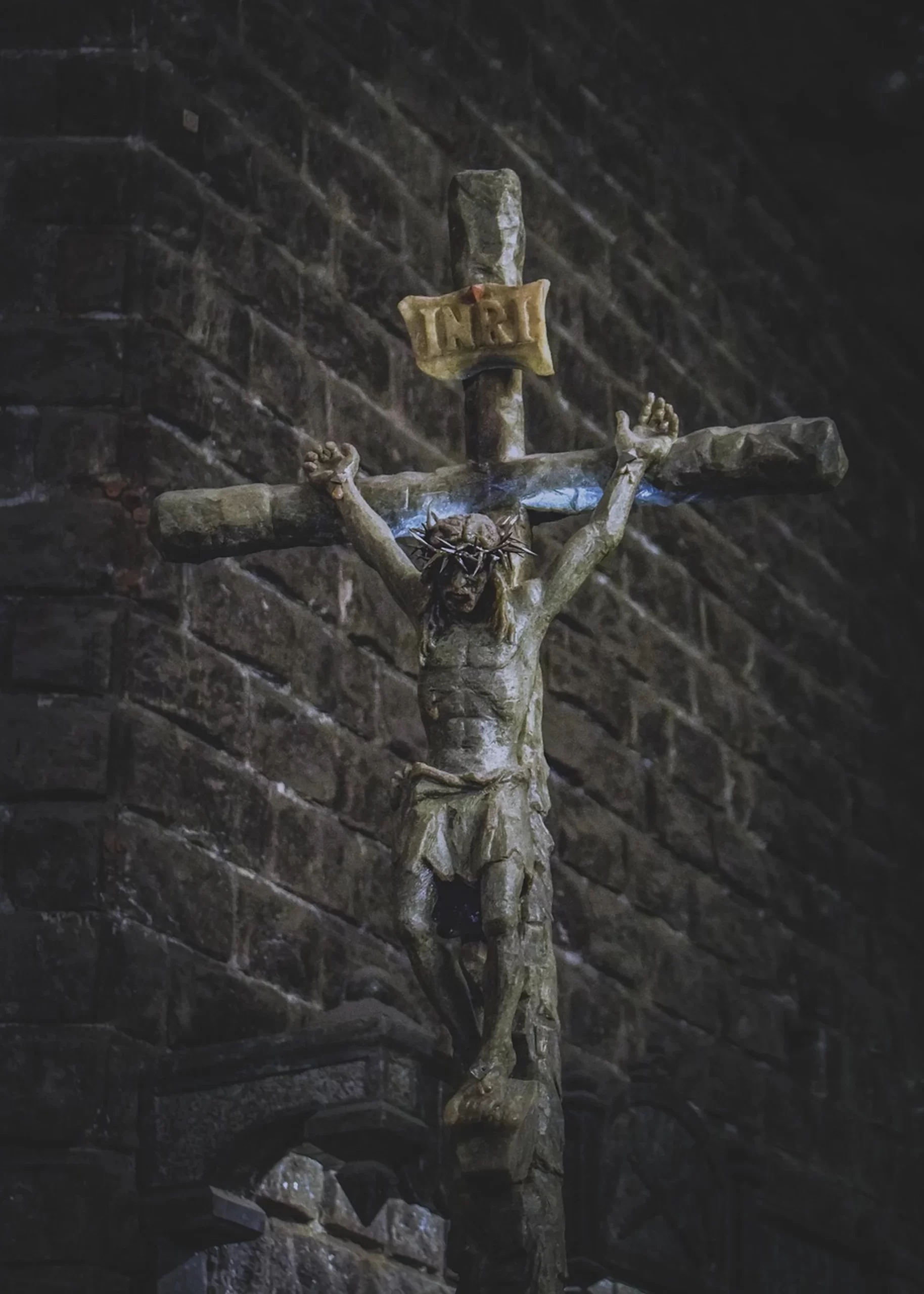
The mine’s history isn’t just architectural — it’s the story of a working guild that operated under royal charter for centuries. Miners passed skills down through generations, and the mine developed its own internal culture, patron saint (Saint Kinga, a Hungarian princess credited in legend with discovering the deposit), and safety traditions long before modern mining regulation existed. Many of the statues and chapel carvings along the Tourist Route were made by miners themselves during their working shifts, using nothing but salt, hand tools, and time — the Chapel of St. Kinga alone represents more than six decades of largely unpaid, devotional labour by successive generations of the same mining families.
That detail tends to land differently in person than it does on the page: walking through a chamber knowing it was carved slowly, by hand, by people whose day job this also was, changes how the scale of the place reads. It’s part of why Marta usually recommends the guided Tourist Route over rushing an independent visit — a guide fills in this context in a way that a self-directed walk-through often misses entirely.
Photography Inside the Mine
Photography is generally allowed on the Tourist Route (a small photo permit fee may apply depending on current mine policy — check at the ticket counter), and the lighting inside the chambers, especially the Chapel of St. Kinga, is dramatic enough to reward a steady hand. Tripods and flash photography are typically restricted, both for preservation reasons and because groups move through on a schedule. A camera or phone with decent low-light performance will do better here than trying to force a flash shot of the salt chandeliers.
Marta’s tip: the Chapel of St. Kinga is the one spot worth pausing an extra minute for a proper shot rather than snapping quickly and moving on with the group — the guide typically allows a short stop there specifically because so many visitors ask for it.
How Wieliczka Fits Into a Longer Krakow Itinerary
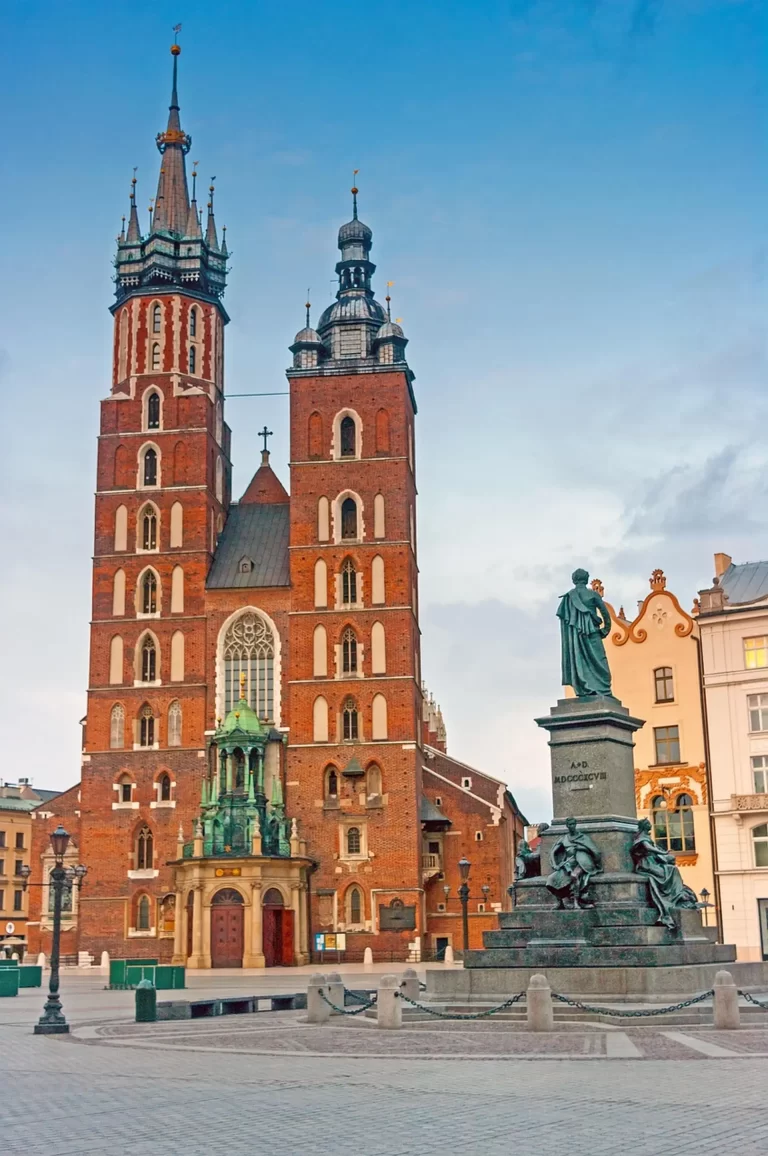
For visitors building a multi-day Krakow itinerary, Wieliczka works best as a half-day slot rather than something squeezed in around a full day of other sightseeing — between the underground walk and the round-trip travel time, it realistically takes up a morning or an afternoon. Locals tend to pair it with a lighter second half of the day in the Old Town rather than another full-scale attraction, since three hours of walking underground is more tiring than it sounds.
Is Wieliczka Salt Mine Worth It?
For a city with no shortage of competing day-trip options, Wieliczka holds up better than most under scrutiny. Locals who’ve taken multiple rounds of visiting friends and family through it consistently point to the same reason: it doesn’t rely on scenery or a single photo moment the way some day trips do — it rewards genuine curiosity about how something this large was built by hand, over centuries, underground. Visitors expecting a quick highlight-reel stop sometimes come away less impressed than those who go in prepared to spend the full two to three hours actually looking around.
What to Read Next
- Wieliczka Salt Mine Tour from Krakow: How to Book and What’s Included
- Wieliczka Guided Tour vs Independent Entry: Which Ticket to Choose
- Wieliczka Salt Mine and Auschwitz in One Day: Does It Actually Work?
- Wieliczka Tourist Route vs Miners’ Route: Which Is Right for You
- What the Wieliczka Salt Mine Tour Is Actually Like, Chamber by Chamber
- Wieliczka Salt Mine with Kids and Strollers: What Families Should Know (coming soon)
- How to Get to Wieliczka from Krakow: Train, Bus or Tour Transfer (coming soon)
- Wieliczka Salt Mine: How Many Stairs, How Long and What to Wear Below (coming soon)
Frequently Asked Questions
How far is Wieliczka Salt Mine from Krakow?
About 15 kilometres southeast of the city centre — roughly 20 minutes by regional train or 30-45 minutes by tour bus depending on traffic and pickup stops.
Do I need to book a Wieliczka tour in advance?
Yes, especially in peak season (May-September). The mine uses timed entry, and both tour slots and independent tickets can sell out days ahead in summer.
How many stairs are there at Wieliczka Salt Mine?
The Tourist Route involves roughly 800 steps down through the upper levels. The exit uses a lift, so no stairs are required going back up.
Is Wieliczka Salt Mine suitable for children?
Generally yes for children around seven and older. Strollers aren’t practical on the route; a baby carrier works better for younger children.
Can I visit Wieliczka Salt Mine and Auschwitz on the same day?
It’s physically possible but makes for a long, heavy day — most visitors get more out of splitting the two across separate days if their schedule allows it.
What temperature is it inside Wieliczka Salt Mine?
A constant 14°C (57°F) year-round, regardless of the season outside — a light layer is worth carrying even in summer.
Wieliczka rewards an unhurried visit more than most day trips near Krakow — the scale of what’s been carved underground is easy to rush past on a tight schedule, and easy to appreciate properly with even an extra half hour built in. Whichever ticket route you choose, booking ahead rather than showing up and hoping for a same-day slot will save you the one thing a mine 135 metres underground can’t give back: time.
Plan your visit: Official site · Google Maps