The History of Jewish Krakow: What Kazimierz Was Before 1939
The history of Jewish Krakow before 1939 is easy to compress into a single fact — a large community, then the Holocaust — but that compression skips six centuries of an actual functioning city within a city: its own schools, newspapers, cinemas, political movements and daily life, distinct enough from the rest of Krakow that visitors today are effectively walking through the remains of somewhere that operated by its own internal logic for generations before the war ended it. Knowing that fuller picture changes what standing on Szeroka Street actually means.
Kazimierz Before It Was Jewish
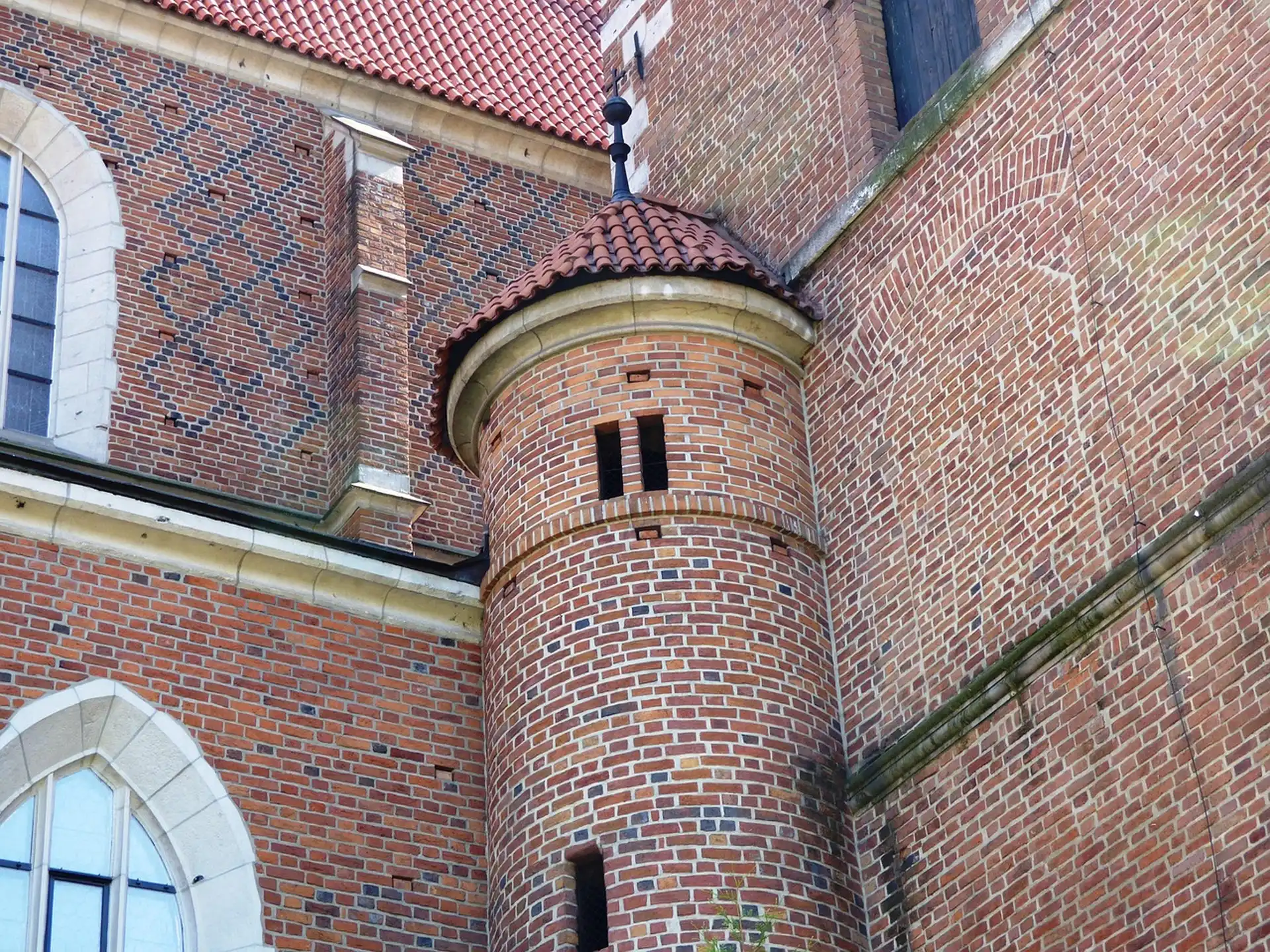
Kazimierz began as its own independent royal town, founded on 27 March 1335 by King Casimir III, sited south of Krakow’s Old Town across a branch of the Vistula, partly for defensive reasons. Casimir also granted Krakow’s Jewish residents trade and religious privileges during his reign, well before Kazimierz became the community’s primary home — the two threads, the town and the Jewish community’s protected status, existed separately for over a century before they merged.
How Jews Came to Kazimierz
A fire that damaged part of Krakow’s Old Town on the night of 29-30 June 1494 was blamed on the city’s Jewish residents, leading to attacks against the community. The following year, King Jan Olbracht allotted the Bawół district of Kazimierz for Jewish settlement. Historians describe this as semi-voluntary rather than a formal expulsion decree — real pressure combined with the genuine appeal of a walled district offering more security and self-governance than remaining in Krakow proper.
A City Within a City
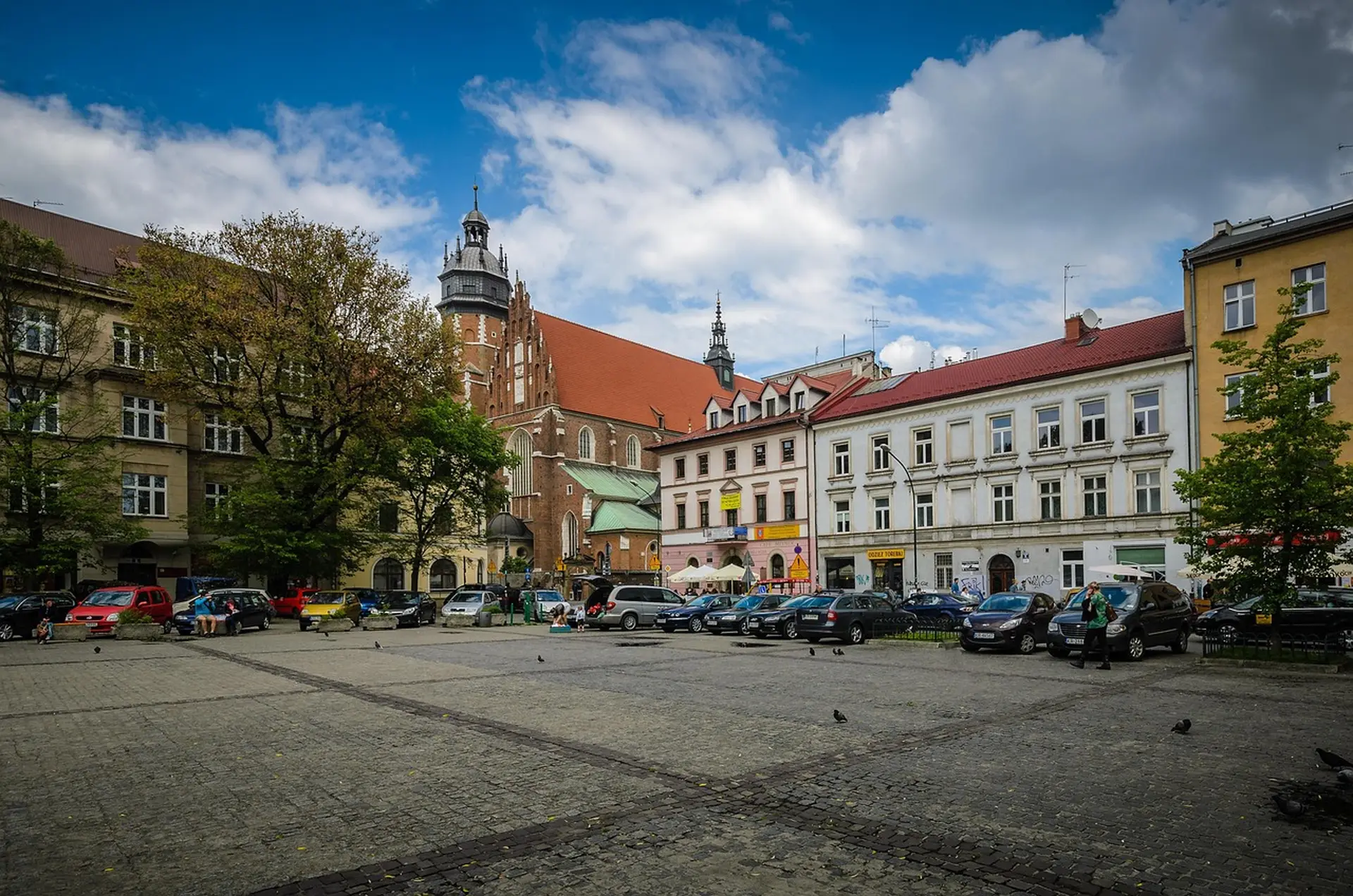
What developed in Kazimierz over the following century was effectively a separate walled Jewish town, formally known as the Oppidum Judaeorum, expanded further in 1553 and again in 1608. It had its own administration, courts and institutions, operating with a degree of autonomy unusual for the period — closer to a self-governing town that happened to sit beside Krakow than a neighbourhood within it. That autonomy shaped how the community developed internally for generations, well before assimilation and Zionism introduced the divisions that would define the pre-war decades.
By the Numbers
By the time war broke out in 1939, Krakow’s Jewish population stood at roughly 56,000 to 60,000, rising toward 70,000 within months as refugees arrived from elsewhere in Poland — over a quarter of the entire city’s population. That figure had grown substantially over the preceding decades; the 1910 count was closer to 32,000, meaning the community had very nearly doubled in size within a single generation before the Holocaust cut it short. Almost none of that growth survived intact past 1945.
Three School Systems, One Community
By 1900, Krakow’s Jewish community supported three parallel school systems reflecting genuinely different visions of Jewish identity: Hebrew-language Zionist schools, Yiddish-language Orthodox schools, and Polish-language schools serving families pursuing assimilation into wider Polish society. All three operated simultaneously, which says something important about how internally varied the community actually was — not a single unified culture, but several overlapping and sometimes competing ones sharing the same streets.
Institutions That Held the Community Together
Beyond the seven main synagogues on and around Szeroka Street, Krakow supported roughly 120 synagogues and prayer houses in total. Community life ran through institutions most visitors never hear about: the Chevra Kaddisha burial society, seven religious brotherhoods, more than a dozen reading rooms and libraries, Jewish cinemas, sports clubs, and a substantial Yiddish and Polish-Jewish press. This wasn’t a community defined only by religious practice — it had its own popular culture, running in parallel with wider Krakow’s. Most of these smaller prayer houses have long since disappeared or been repurposed, leaving the seven main synagogues as the visible remnant of a far larger network.
Zionism and Rabbi Ozjasz Thon
The Zionist movement had a genuinely strong base in Krakow, led prominently by Rabbi Ozjasz Thon of the Tempel Synagogue, whose Reform congregation became closely associated with the movement’s local leadership. Alongside Zionism, many Jewish families pursued full assimilation — higher education, professional careers in medicine, banking, law and trade — meaning the community’s political and cultural life spanned a genuine spectrum rather than a single dominant position.
When Kazimierz Joined Krakow
Kazimierz lost its independent administrative status in 1800-1802 under Austrian partition-era rule, and physical merger with Krakow followed over the next two decades as the old river channel separating the two was filled in and Dietla Street built to connect them; the remaining walls were fully dismantled by 1822. What had been two adjoining towns became, administratively, one city — though the Jewish quarter’s distinct character persisted for well over a century after the formal merger.
A Distinct Character That Outlasted Incorporation
Even after administrative unification, Kazimierz retained a predominantly Orthodox Jewish character right up to 1939, even as wealthier and more assimilated Jewish families increasingly moved into other parts of Krakow. That persistence is part of why the district still reads so distinctly today — it wasn’t simply absorbed into generic Krakow after 1822; it kept functioning as a recognisably separate community for another century.
Walking Through This History Today
None of this pre-war history is visible on the surface in the way the district’s synagogues or the best Kazimierz walking tours cover architecture and religious sites — it’s the invisible layer underneath what’s physically still standing, and the broader guide to Jewish Krakow and the Kazimierz Quarter covers how to actually plan a visit around both the physical sites and this deeper context. A guide who can narrate this history in person, rather than leaving it to plaques, changes what a walk through Szeroka Street actually means — which is what a Kazimierz Jewish Quarter walking tour is generally built to provide.
What Locals Notice
Krakow locals and guides who’ve spent years working in Kazimierz often notice that visitors arrive expecting a single simple story and leave surprised by how genuinely varied pre-war Jewish Krakow actually was — Orthodox and Reform, Zionist and assimilationist, Yiddish and Polish speaking, all coexisting in the same few streets. That complexity, more than any single building, is usually what changes how people think about the district once they’ve actually learned it.
Economic Life in the Quarter
Trade and craft work formed the backbone of Kazimierz’s economy for most of its history — small workshops, market stalls, and later small-scale manufacturing sat alongside the professional class of doctors, lawyers and academics who emerged as assimilation increased in the nineteenth and early twentieth centuries. Plac Nowy’s own history as a poultry market reflects this wider pattern: much of daily Jewish Kazimierz revolved around ordinary commerce, not solely religious or cultural institutions.
This History Versus Podgórze’s Wartime Story
It’s worth distinguishing Kazimierz’s pre-war history from the wartime story most visitors associate with Jewish Krakow generally — the ghetto that confined the community from 1941 was established across the river in Podgórze, not in Kazimierz itself. Kazimierz’s own story is almost entirely a pre-war one: six centuries of settlement, community-building and daily life that ended when residents were forced out of the district and relocated across the river, not destroyed within Kazimierz’s own streets.
Reading the History in What Still Stands
Very little of pre-war Kazimierz’s daily life survives as visible artefact beyond the synagogues and the district’s general street layout — the schools, newspapers, cinemas and reading rooms that once filled the neighbourhood left few physical traces of their own. What remains is largely architectural and religious rather than the popular culture that made up most of ordinary residents’ daily experience, which is part of why understanding the community’s scale and variety matters: it fills in a picture the buildings alone can’t fully tell.
What to Read Next
- Jewish Krakow and the Kazimierz Quarter: Heritage, Synagogues and Tours
- Best Kazimierz Walking Tours Compared: Heritage Over Sightseeing
Frequently Asked Questions
When was Kazimierz founded?
Kazimierz was founded as an independent royal town on 27 March 1335 by King Casimir III, initially separate from both Krakow and its Jewish community.
When did Jews settle in Kazimierz?
Jewish settlement in Kazimierz’s Bawół district began in 1495, after King Jan Olbracht allotted the area following a fire in Krakow’s Old Town the previous year. Historians describe the move as semi-voluntary rather than a formal expulsion.
How large was Krakow’s Jewish community before WWII?
Roughly 56,000 to 60,000 people just before the war, rising toward 70,000 with refugee arrivals in late 1939 — over a quarter of Krakow’s total population at the time.
When did Kazimierz stop being a separate town?
Kazimierz lost its independent administrative status in 1800-1802 under Austrian rule, with physical merger into Krakow completed by the early 1820s.
Was pre-war Jewish Krakow religiously uniform?
No. The community included Orthodox, Hasidic, Reform and secular Zionist elements, supporting three parallel school systems and a wide range of institutions reflecting genuinely different approaches to Jewish identity.
Plan your visit: Official site · Google Maps