Wieliczka Salt Mine: How Many Stairs, How Long and What to Wear Below
Wieliczka Salt Mine’s stairs, timing and dress code come up constantly in questions before the visit, and the honest, specific answers are worth having before you book rather than discovering them at the entrance.
A Quick Overview Before the Details
Three numbers are worth holding in your head before booking: 380 (steps down), 2-3 (hours for the full Tourist Route), and 14-16 (the constant temperature in Celsius, year-round). Everything else in this guide is context around those three facts, but if you only remember one thing, remember to dress for genuinely cool underground conditions regardless of what the weather is doing in Krakow that day.
How Many Stairs, Exactly
The descent is roughly 380 steps down a wooden spiral staircase inside the Daniłowicz Shaft, taking about 10-15 minutes at a steady pace. There are no stairs back up — the visit ends with a fast elevator ride to the surface, taking under a minute. The staircase has handrails throughout and isn’t technically difficult, but it is a sustained, continuous descent rather than a few flights with rest breaks, so it’s worth being realistic about your own fitness level and pacing yourself rather than rushing.
The staircase spirals tightly within the shaft, so groups naturally settle into single file as they descend, and the temperature drop is noticeable well before you reach the bottom — by the final steps you’re fully in the mine’s constant underground climate. Guides typically pause at the bottom to let the group regroup before the walking portion starts, which gives everyone a moment to catch their breath and adjust.
How Long the Whole Visit Takes
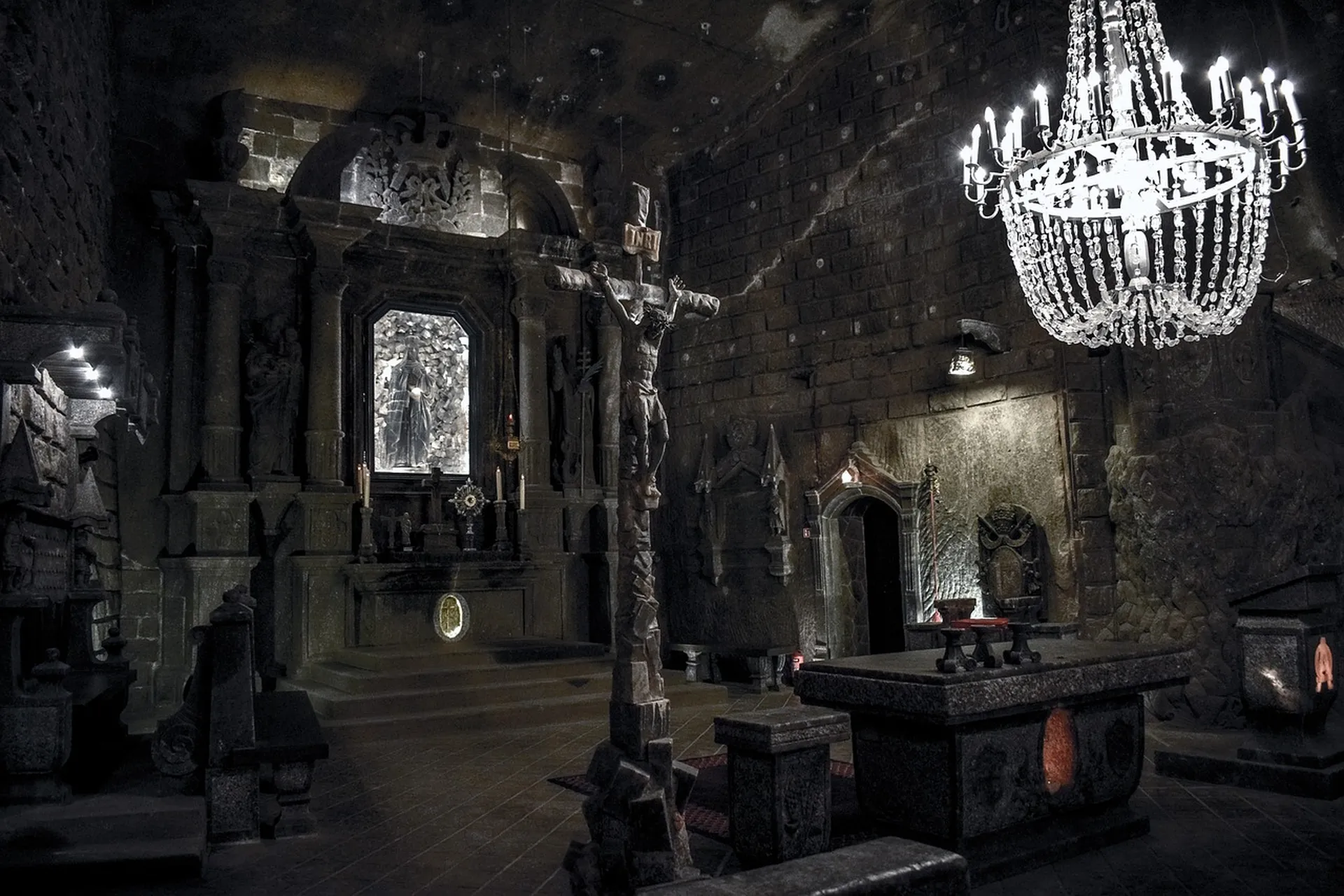
The standard Tourist Route runs 2-3 hours from entrance to exit, including the staircase descent, roughly 3.5km of walking through around 20 chambers, and the elevator ride back up. Add time for the walk from wherever you’re dropped off to the entrance building, and for the gift shop or café if you want a break before heading back to Krakow. Budgeting a half-day (roughly 4 hours door to door including transport) is realistic for most visitors.
This timing applies specifically to the standard Tourist Route. If you’re combining it with the separate, additional Miners’ Route, add another 2-2.5 hours and expect the full combined visit to take up most of a half-day when transport is included on both ends.
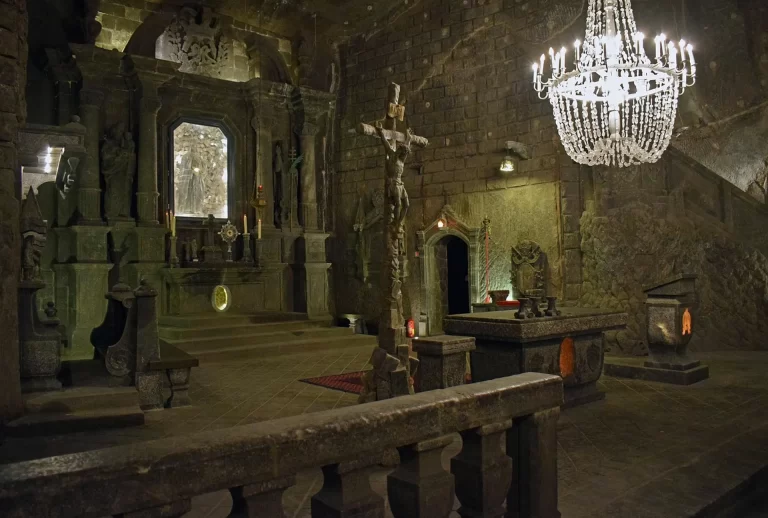
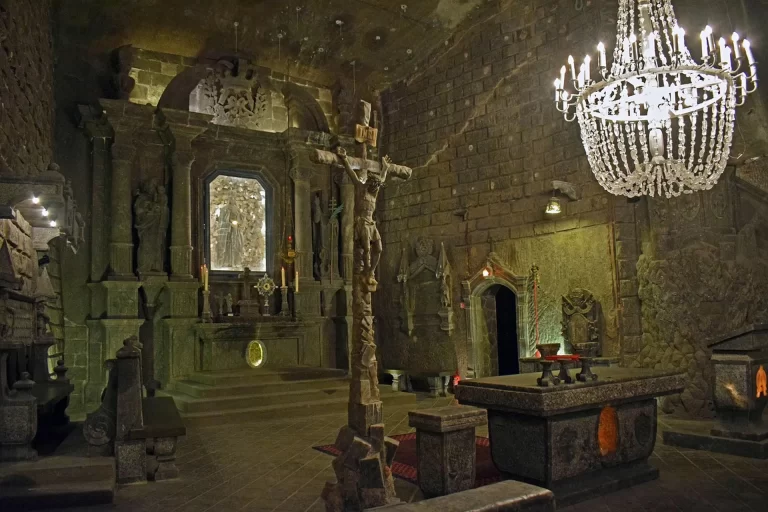
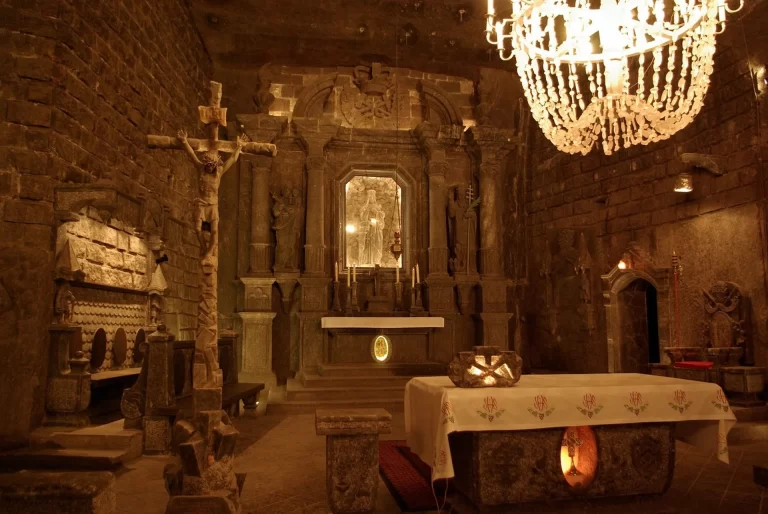
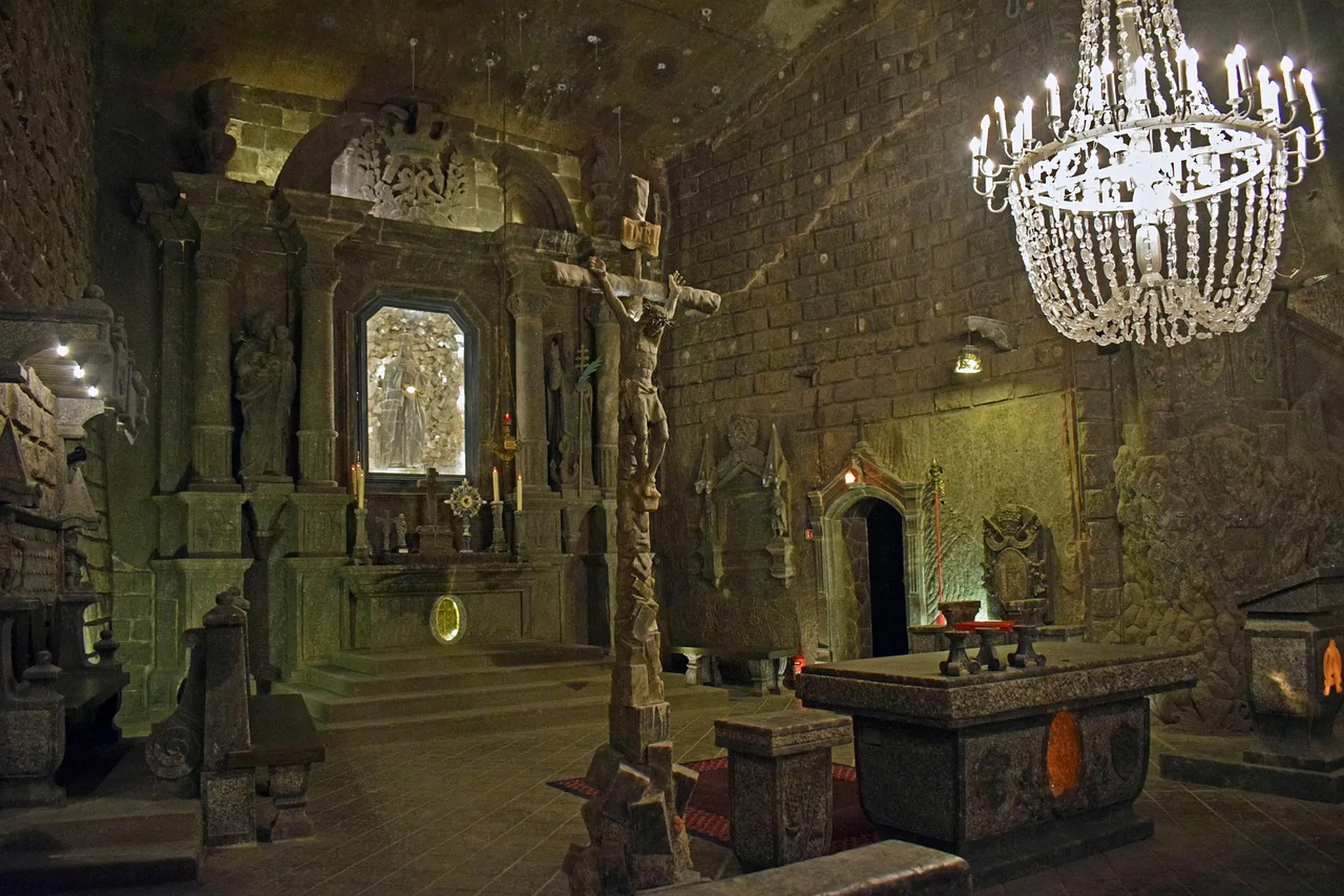
Guides pace groups to cover the full route within that 2-3 hour window without feeling rushed, but visitors wanting to linger longer at specific chambers — the chapel especially — should know that guided groups do move on a schedule, so extended personal time at any single stop isn’t really built into the standard format the way it might be on a self-paced visit elsewhere.
What to Wear
The mine holds a constant 14-16°C year-round regardless of the season outside, so a light jacket or sweater is worth bringing even in the height of summer — it’s a genuinely different climate underground than whatever Krakow’s weather is doing above. Comfortable, closed, flat shoes matter more than anything else on this list; parts of the route have uneven old flooring, and areas near the underground lakes can be slightly damp, making smooth-soled or high-heeled shoes a real hazard rather than just an inconvenience.
Layering works better than a single heavy coat, since the initial staircase descent generates some body heat before the walking pace settles into something steadier and cooler. Gloves aren’t necessary for most visitors but can be a comfortable addition if you tend to run cold, particularly if you’re spending extra time lingering in the chapel or by the lakes for photos.
Fitness and Mobility Considerations
Beyond the initial staircase, the walking portion is on mostly level or gently sloped ground and doesn’t require significant fitness. The staircase itself is the main consideration — anyone with significant mobility limitations, certain heart or respiratory conditions, or difficulty with sustained stair descent should think carefully about whether the standard route is manageable, since there’s no way to skip the stairs on the Tourist Route. It’s worth checking directly with the mine or your tour operator about any accessibility accommodations if this is a concern, since options can change and it’s better to confirm current arrangements than assume.
Pregnant visitors and anyone recovering from recent surgery or injury should also weigh the staircase carefully — it’s not an extreme physical challenge for most people, but 380 continuous steps is a meaningfully different ask than a typical flight of stairs, and there’s no way to pause partway and turn back once you’ve started without walking back up the same stairs you came down (the elevator only runs one direction, toward the surface, at the end of the tour).
What to Bring (and What to Leave Behind)
A small bag or daypack is fine; large backpacks or suitcases aren’t practical given the staircase and narrower sections of the route. A phone or camera for photos is welcome throughout most of the Tourist Route. Signal is essentially nonexistent once underground, so download or screenshot anything you might need — a return train schedule, a map, tour contact details — before descending.
Food and drink policies vary somewhat by tour, but generally light snacks and water are fine to carry, with more formal eating discouraged in the chapel and other ceremonial chambers out of respect for the space. Bathrooms exist at specific points along the route rather than continuously, so it’s worth using one before you begin the descent if you’re not sure when the next opportunity will come.
Photography and What to Expect Visually
Lighting throughout the route is designed for visibility and atmosphere rather than photography specifically, which means a phone camera generally performs fine in the well-lit main chambers like the chapel, but struggles more in dimmer connecting passages. If photography is a priority, a phone with reasonable low-light performance handles most of the route adequately; a dedicated camera with a wider aperture lens gives noticeably better results in the less brightly lit sections, though it’s not necessary for a satisfying set of photos overall.
Tripods and larger camera equipment aren’t practical given the route’s pace and the narrower connecting passages between chambers — the group moves as a unit on a guide’s schedule, so setting up equipment that slows you down isn’t realistic. Handheld shooting, adjusting settings on the move, is the practical approach for anyone serious about photography on this route.
What Locals Notice
Krakow guides who lead this route regularly say the most common visitor mistake isn’t about stairs or distance — it’s underestimating the temperature and showing up in summer clothes with nothing warmer, only to spend two hours mildly cold rather than genuinely enjoying the visit. It’s a small, easily avoidable thing that guides mention constantly precisely because it happens so often.
Book the Wieliczka Salt Mine Guided Tour with Pickup
What to Read Next
- Wieliczka Salt Mine from Krakow: Tours, Tickets and the Underground Route
- Wieliczka Guided Tour vs Independent Entry: What Changes
- What the Wieliczka Salt Mine Tour Is Actually Like, Chamber by Chamber
- Wieliczka Salt Mine with Kids and Strollers: What Families Should Know
Frequently Asked Questions
How many stairs are there at Wieliczka Salt Mine?
Roughly 380 steps down a spiral staircase at the start of the visit. There are no stairs back up — visitors exit via a fast elevator.
How long does the Wieliczka Salt Mine tour take?
The standard Tourist Route runs 2-3 hours, including the staircase descent and roughly 3.5km of walking through about 20 chambers.
What should I wear to Wieliczka Salt Mine?
A light jacket or sweater regardless of season, since the mine holds a constant 14-16°C year-round, and comfortable, closed, flat shoes given uneven and occasionally damp flooring.
Is Wieliczka Salt Mine accessible for people with mobility limitations?
The Tourist Route requires descending roughly 380 stairs with no alternative on the standard route. Anyone with significant mobility concerns should check directly with the mine or their tour operator about current accommodations.
Plan your visit: Official site · Google Maps