Visiting Auschwitz I and Birkenau: What the Two Sites Actually Are
Visiting Auschwitz I and Birkenau means visiting two genuinely different places, even though most people arrive picturing one site. They sit about three kilometres apart, they were built for different purposes, and what survives at each one today looks almost nothing alike. Understanding that difference before arriving changes how the day feels, and it’s the single most useful thing to know going in.
Auschwitz I: The Original Camp
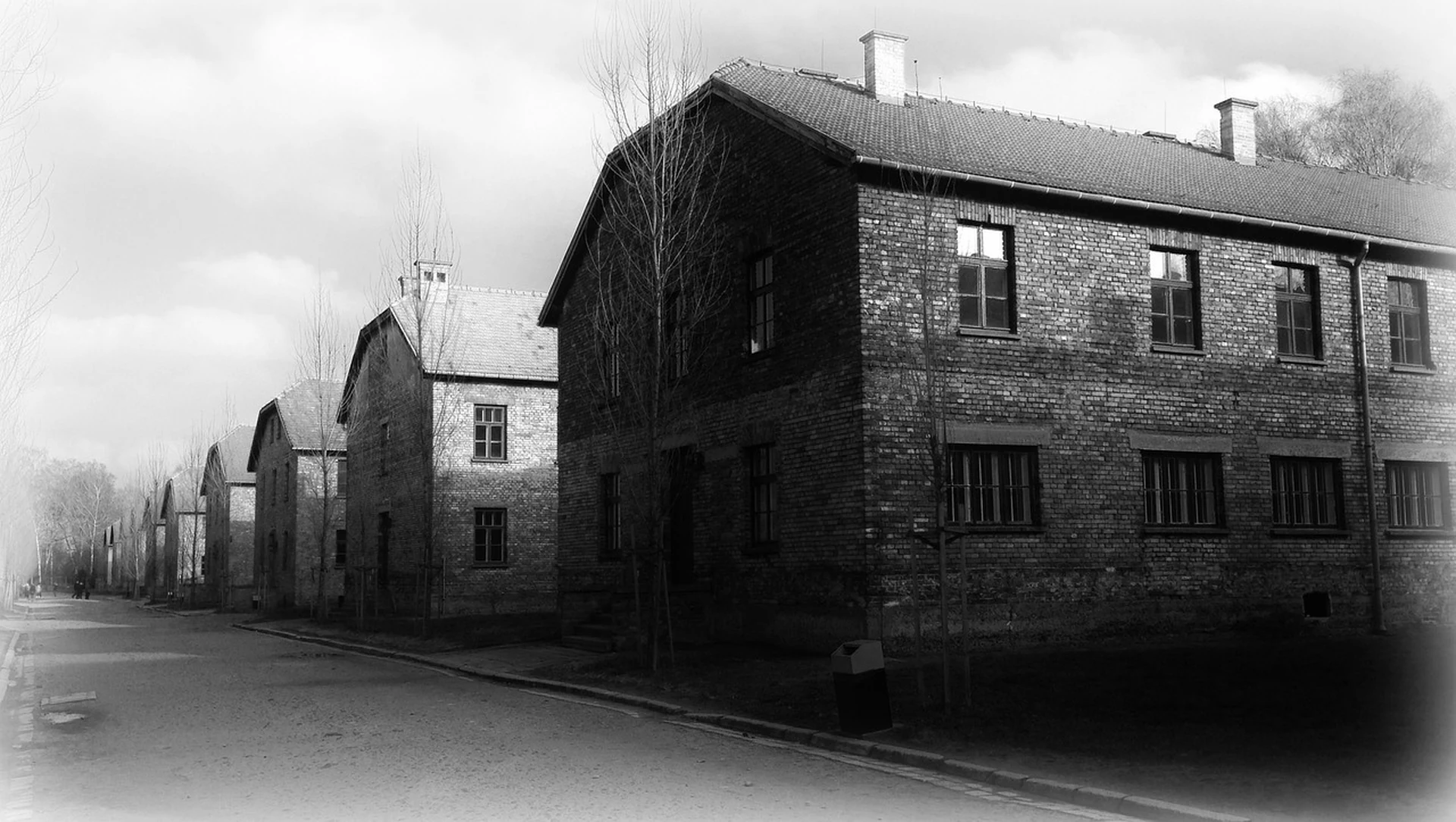
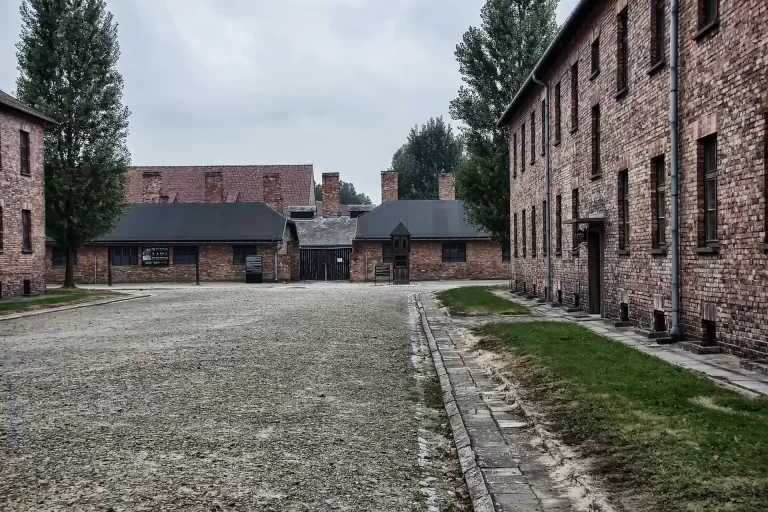
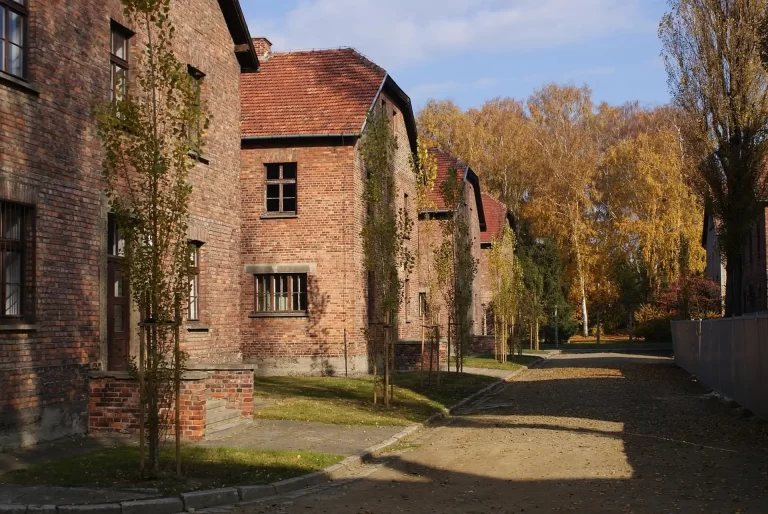
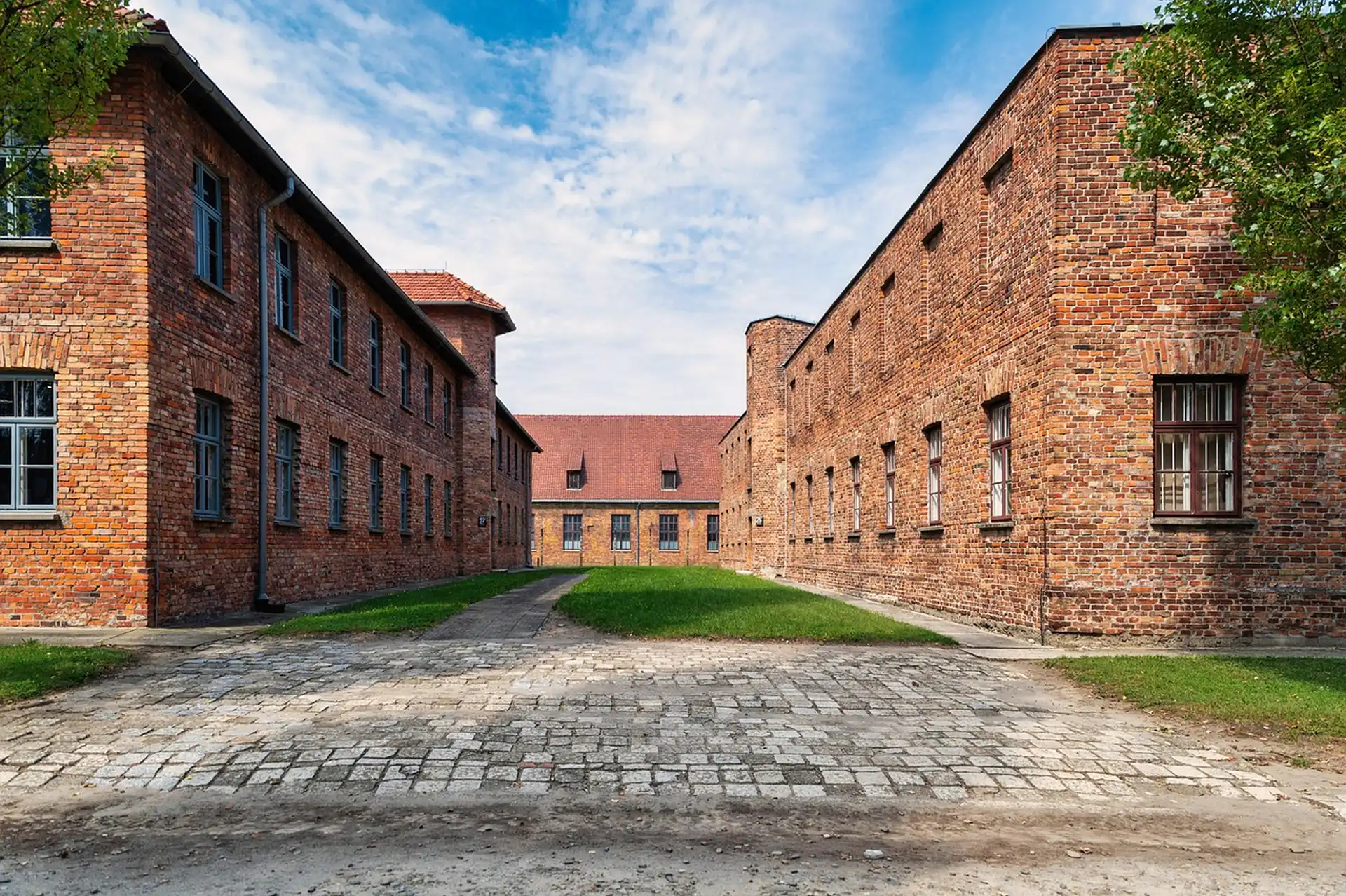
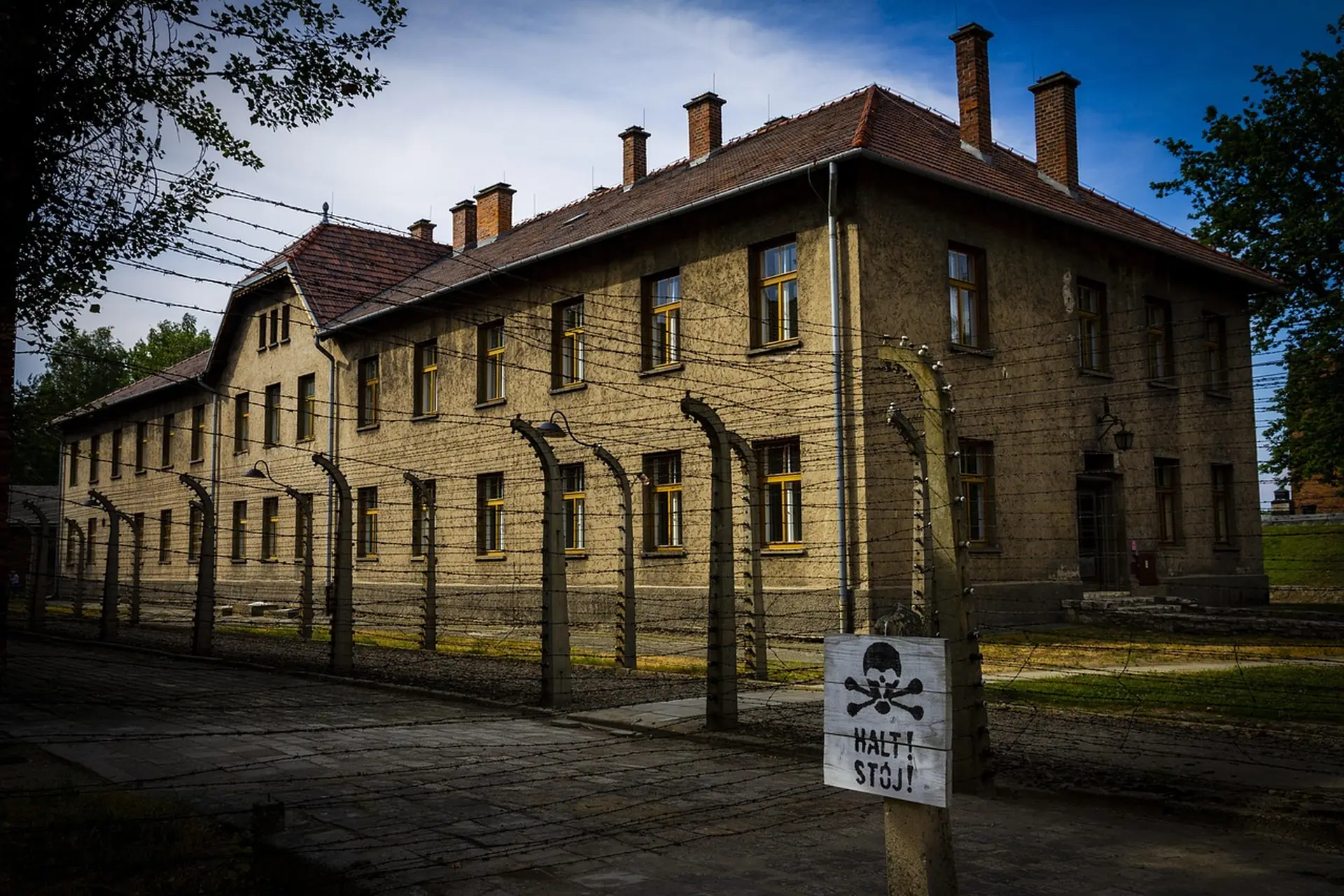
Auschwitz I was established in 1940 in a former Polish army barracks and covers about 20 hectares. This is the site most people picture: the “Arbeit Macht Frei” gate, and rows of solid brick barrack buildings that now house the Museum’s permanent exhibition. Because the buildings themselves survived largely intact, this is where most of the artefacts, photographs and room-by-room exhibitions are displayed — including the room holding victims’ hair in Block 4, and the basement cells of Block 11, both handled with particular sensitivity and both off-limits to photography.
Auschwitz II-Birkenau: The Killing Centre
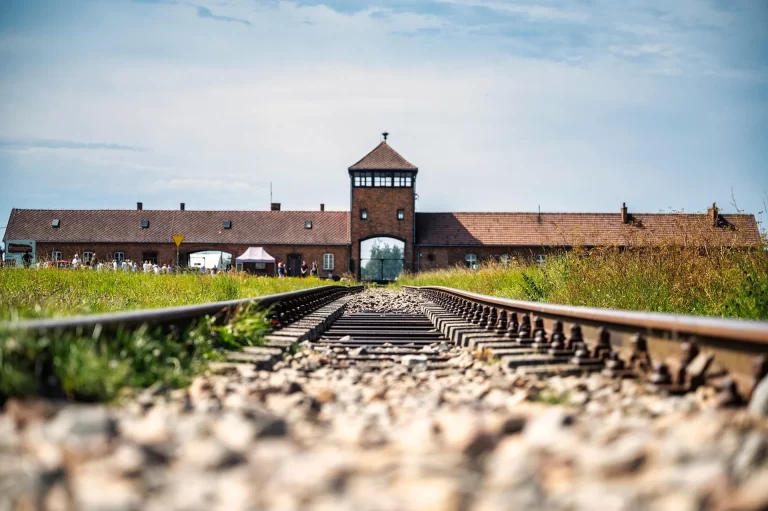
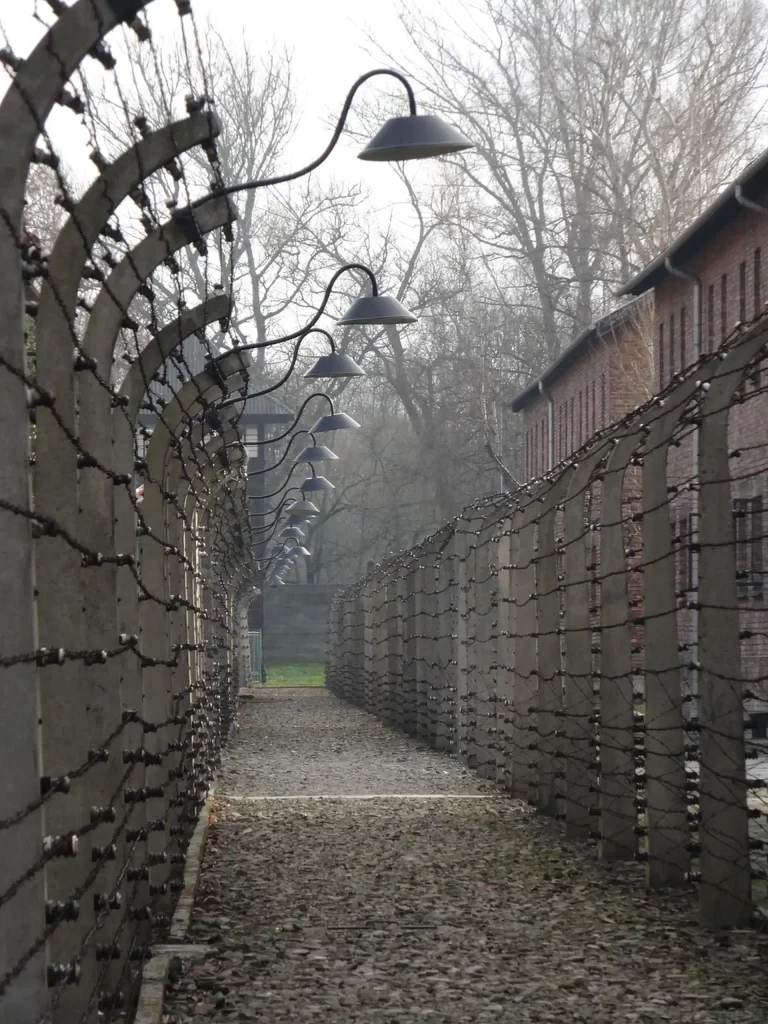
Birkenau, built from 1941, covers roughly 171 hectares — about 8.5 times the area of Auschwitz I — and this is where the majority of murders at the complex actually took place. The scale is the first thing that strikes most visitors: rows of wooden and brick barrack foundations stretching toward the horizon, the rail spur running through the iconic gatehouse to the selection ramp, and the ruins of the gas chambers and crematoria, which SS units partially destroyed before the camp’s liberation in an attempt to hide the evidence. Far less of Birkenau survives as intact buildings compared to Auschwitz I, which is itself part of what the site communicates.
Size and Layout Compared
| Auschwitz I | Auschwitz II-Birkenau | |
|---|---|---|
| Area | 20 hectares | 171 hectares |
| Established | 1940 | 1941 |
| What survives | Brick barracks, mostly intact, now exhibition space | Mostly ruins, foundations and the rail spur; few intact buildings |
| Typical guided time | About 1.5 hours | About 1.5 hours |
| Character of the visit | Indoor exhibitions, room by room | Outdoor, open ground, more walking |
What’s Preserved at Each Site vs What’s Gone
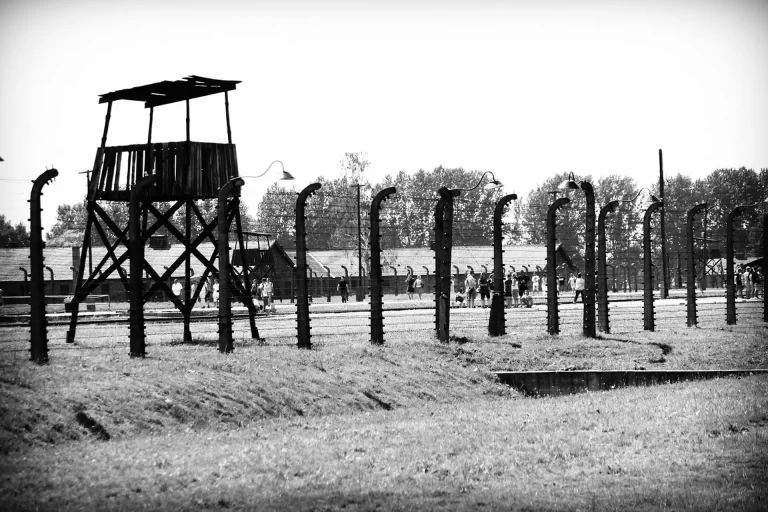
This is worth understanding before arriving, because it explains why the two halves of the day feel so different. Auschwitz I looks the way it does because the buildings were repurposed into a museum relatively early, with exhibitions built inside existing structures. Birkenau looks the way it does because it was the site of both mass killing and deliberate destruction of evidence in the war’s final months — so a visitor sees mostly what’s left: foundations, chimneys, watchtowers and open ground, rather than furnished rooms. Neither site is “more real” than the other; they simply preserve different kinds of evidence. Both are part of the same UNESCO World Heritage designation, granted specifically to preserve physical evidence of the crime rather than to reconstruct or restore it, which is part of why the Museum leaves ruins as ruins rather than rebuilding what was destroyed.
The Transfer Between Sites
Guided tours cover the roughly three kilometres between the two sites by shuttle bus, included in the tour price, taking about 10 to 15 minutes. It’s also possible to walk the distance along the road connecting them, though almost no visitors do this as part of a standard guided day given the fixed schedule most tours run on.
Which Site to See First
Every standard guided format starts at Auschwitz I and moves to Birkenau afterward, and there’s a reason beyond convenience: Auschwitz I’s indoor exhibitions provide the historical context that makes Birkenau’s scale legible rather than simply overwhelming. Visiting Birkenau first, without that grounding, tends to leave people with less understanding of what they’re actually looking at.
A Note on Auschwitz III-Monowitz
A third site, Auschwitz III-Monowitz, was a forced-labour camp attached to the IG Farben chemical works and is not part of the standard visitor route — it sits further from the main complex and has almost nothing preserved for public viewing. When people refer to “visiting Auschwitz,” they mean Auschwitz I and Birkenau; Monowitz is a separate historical chapter that most guided tours mention rather than visit.
Planning the Visit Itself
Once the difference between the two sites makes sense, the next practical question is booking — our guide to booking Auschwitz tickets from Krakow before they sell out covers timing and availability, and a small-group guided tour from Krakow bundles the transfer between both sites into a single fixed-schedule day, which is the simplest way to see both without arranging transport yourself.
Marta’s Practical Notes
Locals who bring first-time visitors tend to prepare them the same way: expect Auschwitz I to feel close and detailed, and Birkenau to feel vast and quiet, almost the opposite register. Bring a layer regardless of season, since Birkenau’s open ground offers very little shelter from wind, and pace the morning so there’s a short break between the two — most guided tours build this in naturally with the shuttle transfer.
What You Actually Walk Through at Auschwitz I
The exhibition at Auschwitz I is arranged block by block, each one built around a different theme: arrival and registration, daily life and living conditions, the mechanics of extermination, and the personal belongings confiscated from arriving prisoners — shoes, suitcases, eyeglasses, displayed in room-sized quantities that communicate scale in a way statistics alone don’t. The Death Wall, in the courtyard between Blocks 10 and 11, is where executions took place, and the standing cells in Block 11’s basement are among the most direct physical evidence of the camp’s punishment system. This is a slower, more detailed kind of walking than Birkenau, moving from room to room rather than across open ground.
What You Actually Walk Through at Birkenau
Birkenau reads almost the opposite way. After passing through the gatehouse — the building visible in nearly every photograph of the camp — visitors follow the rail spur toward the ruins of the gas chambers and crematoria at the far end of the site, roughly a fifteen-minute walk. Along the way, rows of chimneys mark where wooden barracks once stood; most of the wood structures themselves didn’t survive, though a handful of brick barracks in the site’s far section remain intact and are open to visitors. The overwhelming impression most people describe is distance and quiet, rather than the dense, detailed information of Auschwitz I.
How Much Time Each Site Actually Needs
A standard guided tour splits roughly evenly, about 1.5 hours at each site, but the two hours feel different in practice. Auschwitz I’s pace is set by the density of exhibition content — groups genuinely need the full time to move through the blocks properly. Birkenau’s time is set more by physical distance than by content density; a visitor moving quickly could technically cover the ground faster, but most tours deliberately keep a measured pace here rather than rushing the site that saw the majority of the complex’s killing.
A Local Perspective on Visiting Both
Locals who’ve accompanied visiting family through both sites more than once tend to notice the same pattern first-timers don’t expect: it’s Birkenau, not Auschwitz I, that stays with most people longest afterward, precisely because of the emptiness rather than in spite of it. Auschwitz I gives the historical facts and context that make the visit legible; Birkenau is where the scale of what happened actually registers. Seeing both, in that order, is what the standard tour format is built around, and it’s worth resisting any temptation to rush the second half simply because there’s less to read.
What to Read Next
- Visiting Auschwitz-Birkenau from Krakow: Tours, Tickets and What to Know
- How to Book Auschwitz Tickets from Krakow Before They Sell Out
Frequently Asked Questions
What is the difference between Auschwitz I and Birkenau?
Auschwitz I was the original camp, now largely preserved as museum exhibition space inside its original brick buildings. Birkenau, about 8.5 times larger, was the main killing centre and survives mostly as ruins, foundations and open ground rather than intact structures.
Which is bigger, Auschwitz I or Birkenau?
Birkenau is far larger — roughly 171 hectares compared to 20 hectares at Auschwitz I, making it about 8.5 times the size of the original camp.
How do visitors get between Auschwitz I and Birkenau?
A shuttle bus, included in guided tour pricing, covers the roughly three kilometres between the two sites in about 10 to 15 minutes.
Why does Auschwitz I have more intact buildings than Birkenau?
Auschwitz I’s brick barracks were repurposed into museum exhibition space soon after the war. At Birkenau, SS units destroyed much of the killing infrastructure before liberation in an attempt to hide evidence, leaving mostly ruins and foundations today.
Is Auschwitz III-Monowitz open to visitors?
No. Monowitz, the forced-labour camp attached to the IG Farben works, is not part of the standard visitor route and has almost nothing preserved for public viewing.
A quick note on the links above: the tour recommended in this guide is chosen on real review volume and rating, the same standard used across this site; if you book through one of these affiliate links, this site earns a small commission at no extra cost to you.
Plan your visit: Official site · Google Maps