Why Nowa Huta Exists: What a Soviet Steel Town Reveals About Poland
Why Nowa Huta exists is really a question about power — specifically, the new communist government’s need, after WWII, to reshape a historic, Catholic, culturally conservative city like Krakow into something more aligned with its own vision of Poland. The answer says as much about mid-century Soviet-bloc politics as it does about any single building in the district. For a fuller look at how the district looks and functions today, see Marta’s guide to communist-era Krakow and Nowa Huta.
Krakow’s “Problem” for the New Government
After WWII, Krakow was seen by Poland’s new communist government as politically inconvenient — a city with deep Catholic roots, a strong intellectual and university tradition, and comparatively little industrial working class, which the ruling party viewed as its natural base of support. Unlike Warsaw, largely destroyed and rebuilt under state control, Krakow’s historic core survived the war largely intact, leaving the government with a city it couldn’t easily remake but wanted to counterbalance.
The solution wasn’t to alter Krakow itself but to build something adjacent to it: an entirely new industrial town, populated by a new working class loyal to the state, planted deliberately close enough to exert cultural and political influence on the old city.
This wasn’t a subtle move — planners deliberately chose a site just a few kilometers from Krakow’s Old Town, close enough that the new industrial population would be woven into the city’s daily life and, eventually, its politics, rather than existing as a separate, distant town.
The Steelworks as the Real Purpose
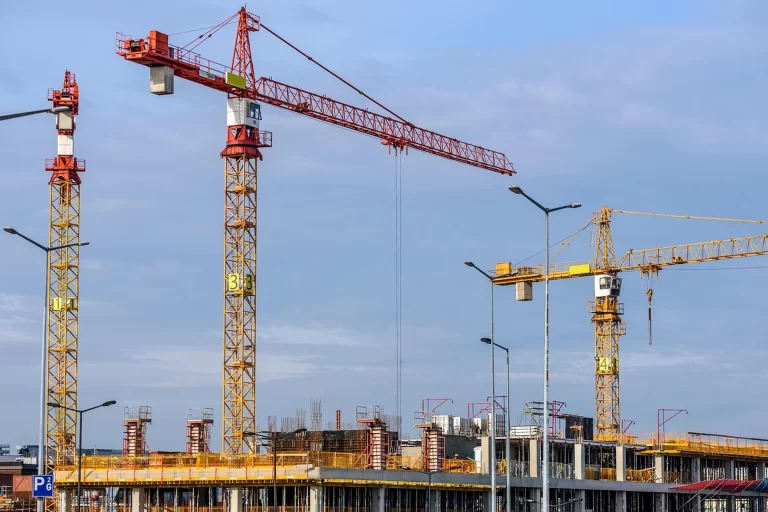
Nowa Huta was built around the Vladimir Lenin Steelworks (later renamed), a massive industrial complex constructed largely without regard for whether the region even had convenient access to the raw materials the steelworks needed — iron ore had to be transported considerable distances, a logistical inefficiency the government accepted because the steelworks’ real purpose was ideological and political as much as economic.
Tens of thousands of workers, many recruited from rural areas across Poland, relocated to Nowa Huta for jobs, housing and a stake in a state-planned future — a resettlement that reshaped not just the district’s population but its social character for decades.
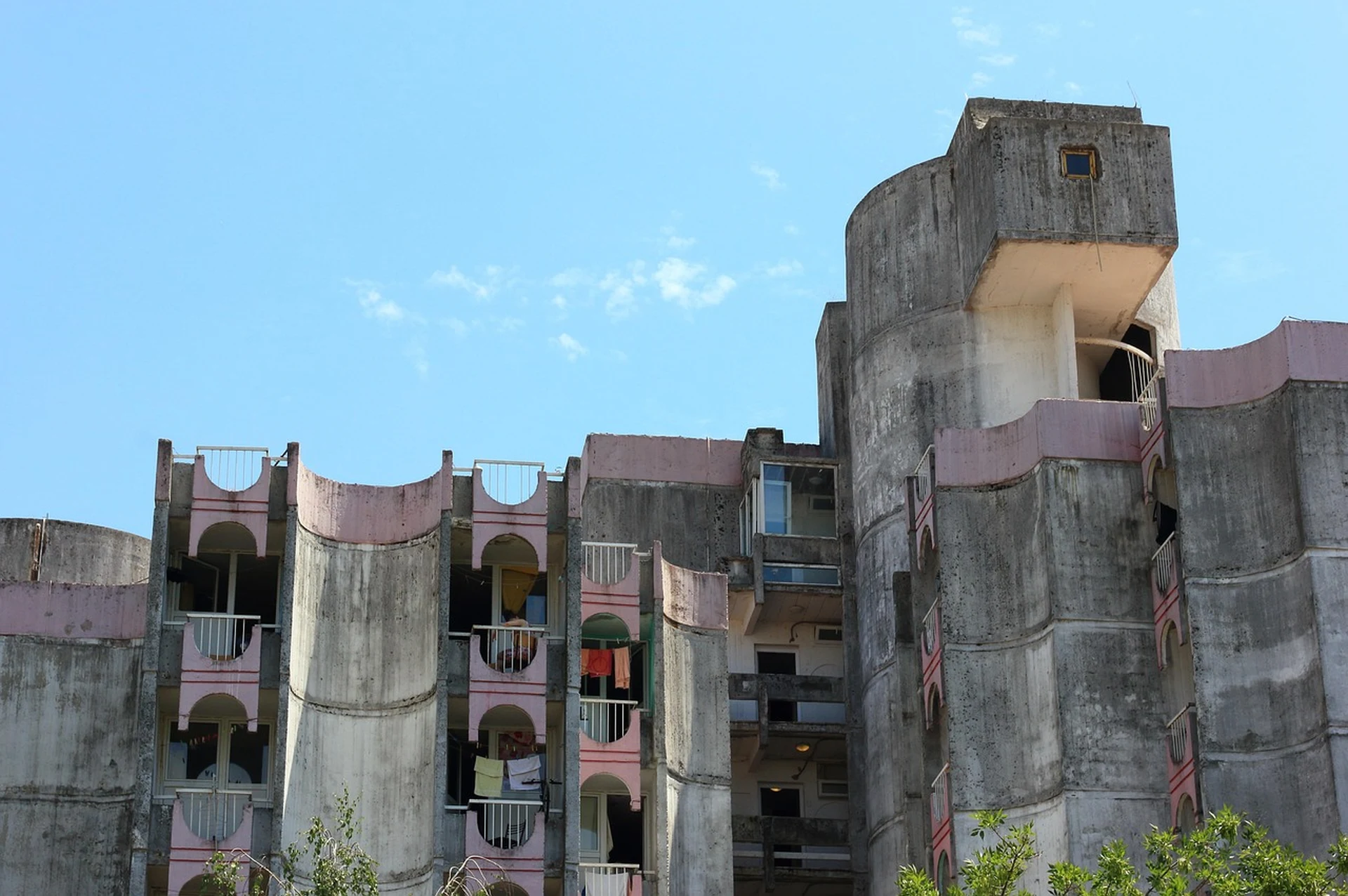
Housing came with the jobs, in the form of the same uniform apartment blocks that still define the district today — an intentional package deal meant to bind workers’ material wellbeing directly to the state that provided it.
Architecture as an Ideological Statement
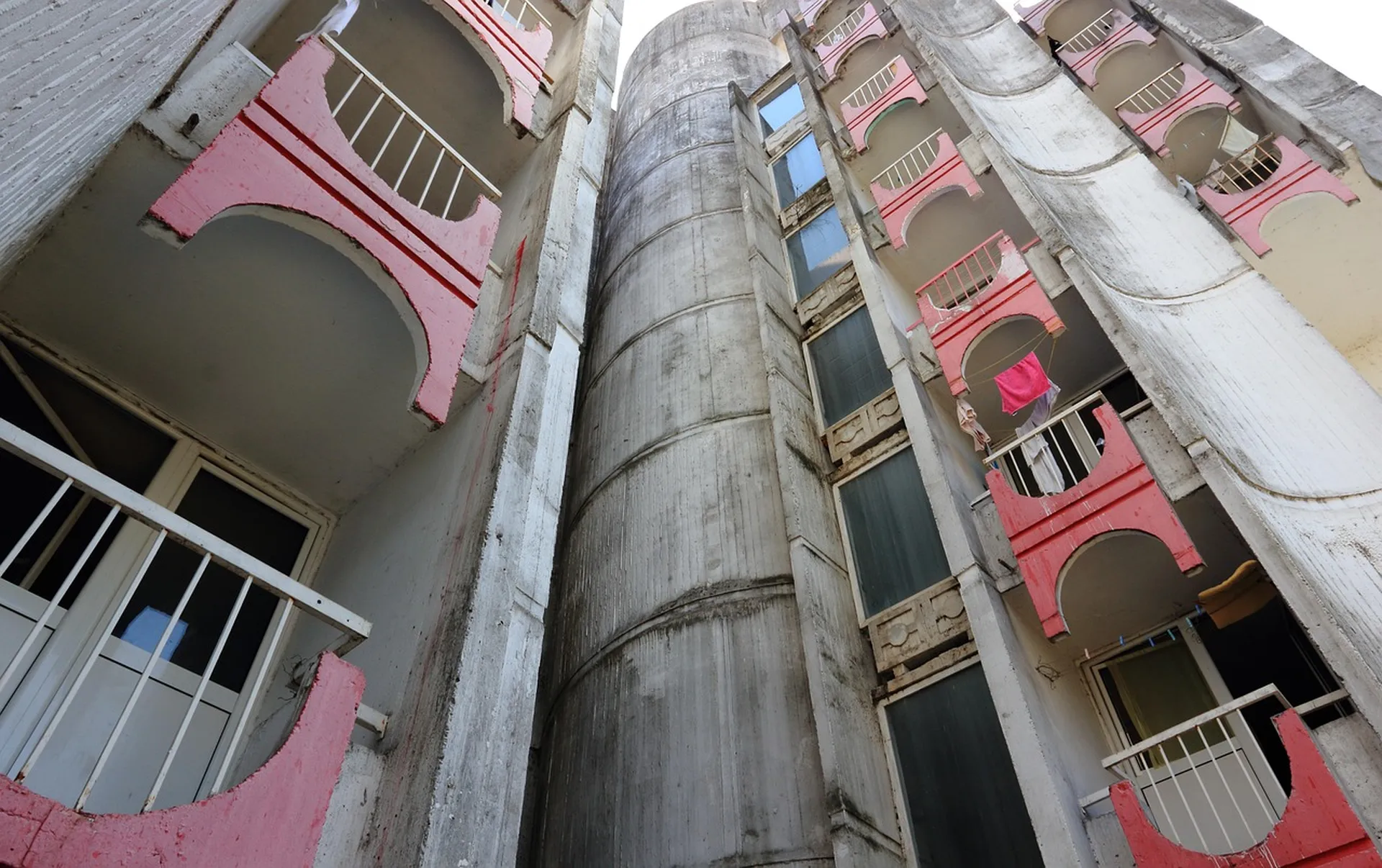
The district’s Socialist Realist architecture wasn’t an aesthetic afterthought — it was the plan itself. Wide, monumental boulevards radiating from a central square, uniform apartment blocks, and grand public buildings were designed to express collective purpose and state power, deliberately rejecting the older, organic street patterns of cities like Krakow’s Old Town.
Notably, the original plan for Nowa Huta included no churches at all — a pointed omission in an overwhelmingly Catholic country, and one that set up decades of tension between the district’s residents and the state.
The scale was deliberate too — buildings sized and spaced to feel monumental on approach, a visual language borrowed from Soviet urban planning more broadly and applied here as a statement of the new order’s permanence and ambition.
The Church That Was Not Supposed to Exist
That tension eventually produced Arka Pana, a church residents fought for over roughly two decades before it was finally built in the 1970s, becoming both a spiritual center and a quiet act of resistance against the district’s original planning. Its unusual, ship-like modernist design carries real symbolic weight as a result. Marta’s guide to the Nowa Huta tour experience covers the church and other key sites in more detail.
The campaign involved petitions, open-air masses held on the site before construction was approved, and repeated confrontations with local authorities — a sustained, organized pressure campaign that eventually forced the state’s hand, well before the more famous Solidarity-era protests of the following decade.
Nowa Huta’s Role in Poland’s Anti-Communist Movement
By the 1980s, the irony had become sharp: a district built explicitly to house a loyal, state-supporting working class became one of the centers of the Solidarity movement’s resistance against that same state, with steelworkers and residents playing a significant role in the protests that eventually contributed to communism’s collapse in Poland.
Strikes centered at the steelworks throughout the 1980s drew national attention, and the district’s residents faced real confrontation with state security forces during this period — a stark contrast to the loyal, contented workforce the original planners had envisioned.
What the District Says About Poland More Broadly
Nowa Huta functions almost as a case study in how communist-era urban planning across the Soviet bloc used architecture and industry as tools of political engineering — and how, in Poland’s case specifically, deep-rooted Catholic identity and eventual working-class discontent proved resistant to that engineering in ways the original planners hadn’t anticipated.
Visiting with This History in Mind
Knowing this background changes how the district reads on a visit — the wide boulevards stop looking merely spacious and start looking calculated, the absence of an original church becomes conspicuous rather than incidental, and the steelworks in the distance shifts from industrial backdrop to the entire reason the district exists.
What Locals Notice
Krakow locals with family roots in Nowa Huta often describe a more complicated relationship with the district than outsiders might expect — pride in the steelworks and the community it built, alongside clear-eyed acknowledgment of the political manipulation behind its founding, a duality that’s hard to fully appreciate without hearing it directly from residents who lived through the district’s history.
For visitors who want to see the steelworks and the district’s key sites guided by someone who can walk through this history in person, this Nowa Huta adventure tour in vintage communist-era cars covers the core route with commentary built in.
Many locals also note that understanding Nowa Huta’s founding purpose reframes visits to Krakow’s Old Town too — the two places exist in a kind of dialogue, one built organically over centuries, the other imposed all at once specifically to counterbalance it.
What to Read Next
- Communist-Era Krakow and Nowa Huta: Cold War Tours and the Steel-Town Story
- Nowa Huta Tour from Krakow: Inside the Communist City Built from Nothing
Frequently Asked Questions
Why was Nowa Huta built?
Nowa Huta was built by Poland’s communist government after WWII to create a state-loyal industrial working class near culturally conservative Krakow, centered around a massive steelworks.
Did Nowa Huta originally have a church?
No. The original plan included no churches, a deliberate choice given the district’s ideological purpose. Residents fought for roughly two decades before Arka Pana was finally built in the 1970s.
What role did Nowa Huta play in the fall of communism?
By the 1980s, Nowa Huta’s steelworkers and residents were significant participants in the Solidarity movement’s protests against the communist government, ironic given the district’s original purpose.
Plan your visit: Official site · Google Maps