Free Things to See in Krakow’s Old Town: An Honest Walking List
Free things to see in Krakow’s Old Town add up to more than most visitors expect, given how much of the historic center is walkable, exterior architecture, and public space rather than ticketed interiors. This is an honest walking list — not a stretched-out ranking of minor curiosities, just the specific free sights worth building a route around, roughly in the order you’d encounter them on a single loop starting and ending at the Main Square. None of it requires a ticket, a reservation, or even a plan more detailed than knowing roughly which direction to walk next.
The Main Square Itself
Krakow’s Main Market Square is one of the largest medieval town squares in Europe and costs nothing to walk across, sit in, or simply look at. The Cloth Hall’s exterior arcades, St. Mary’s Basilica’s twin towers, and the Town Hall Tower’s remaining stump (the rest was demolished in the 1820s) are all visible and free to view without setting foot inside anything. Early morning is the best time to see it without crowds — Marta’s note on the square at dawn covers why in more detail.
Watching the hourly trumpet call from St. Mary’s tower — cut off mid-phrase, as it has been since a trumpeter was reportedly struck by an arrow while sounding an alarm centuries ago — costs nothing and takes about a minute out of a walk you’re already doing. The Adam Mickiewicz statue at the square’s center, a common meeting point for locals and visitors alike, is also worth a look for the four allegorical figures at its base representing different themes from the poet’s work.
The Barbican and City Walls
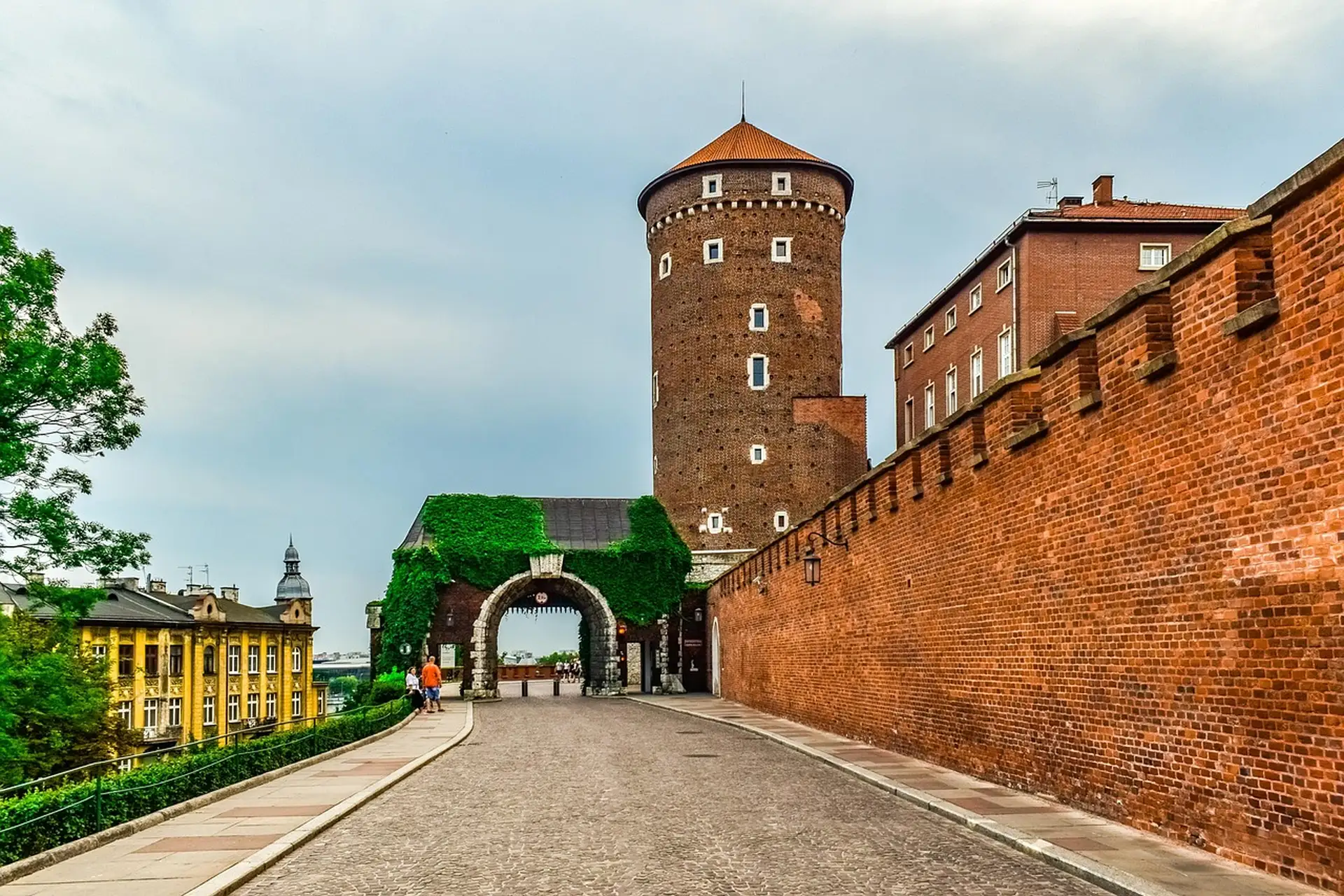
At the northern edge of the Old Town, the Barbican is one of the best-preserved medieval fortifications of its kind in Europe — a circular brick defensive structure that once guarded the main approach to the city. Walking around its exterior is free; only entering the small museum inside requires a ticket, and most visitors get the full architectural impact from outside anyway. Connected to it is a surviving stretch of the old city walls along Floriańska Street, one of the only remaining fragments of a fortification system that once encircled the entire Old Town.
The Barbican was built in the late 15th century as part of a broader fortification upgrade following improvements in siege warfare technology across Europe, and its thick brick walls with multiple rows of firing positions reflect that defensive engineering directly. Of the roughly 40-50 similar barbican structures once built across Europe, only a handful survive intact today, which makes this one a genuinely significant piece of military architecture rather than just an attractive old building.
The Planty Park Ring
When Krakow’s medieval walls were demolished in the early 19th century, the ring of land they occupied was turned into the Planty — a continuous green park loop that now traces the exact footprint of the old fortifications around the entire Old Town. Walking the full loop takes roughly 45-60 minutes and passes several free monuments, fountains, and the best vantage points for photographing the Barbican and surviving wall fragments from a distance. It’s also simply a pleasant, shaded, mostly flat walk if you need a break from cobblestones.
Along the way, the Planty passes several statues and monuments worth a brief stop, including a monument to Grunwald victory commemorations and various memorial plaques tied to Krakow’s academic and cultural history. Benches are frequent throughout, making it an easy place to break up a longer walking day, and several of the Old Town’s cafés and restaurants back directly onto the park, so pausing for coffee doesn’t require detouring far from the route.
Floriańska Street and St. Florian’s Gate
Floriańska Street, the main artery connecting the Barbican to the Main Square, is free to walk and lined with historic townhouses, several with preserved facades and decorative details worth looking up for. St. Florian’s Gate at its northern end, the only one of the city’s original eight gates still standing, marks the formal entrance to the Royal Route that Polish kings once processed along on their way to coronation at Wawel Cathedral.
Several of the townhouses along Floriańska have plaques marking former residences of notable Polish figures, including one associated with a young Karol Wojtyła, the future Pope John Paul II, during his student years in Krakow. The street can get crowded at peak times since it’s the primary route between the train station area and the Main Square, so an early or late walk gives a noticeably calmer version of the same free architecture.
Collegium Maius Courtyard
The Jagiellonian University’s oldest building, Collegium Maius, has a Gothic arcaded courtyard that’s free to step into during opening hours, even without paying for the museum inside. It’s one of the more overlooked free stops in the Old Town — a genuinely atmospheric medieval academic courtyard that most visitors walk past entirely because it doesn’t announce itself from the street the way the Main Square’s landmarks do.
The courtyard also features a mechanical clock installed in a niche above one of the arcades that performs a short animated sequence of academic figures on the hour during the day — a small, free detail that most walking tours don’t mention because it’s easy to miss unless you’re standing in the right spot at the right time.
Wawel Hill’s Grounds
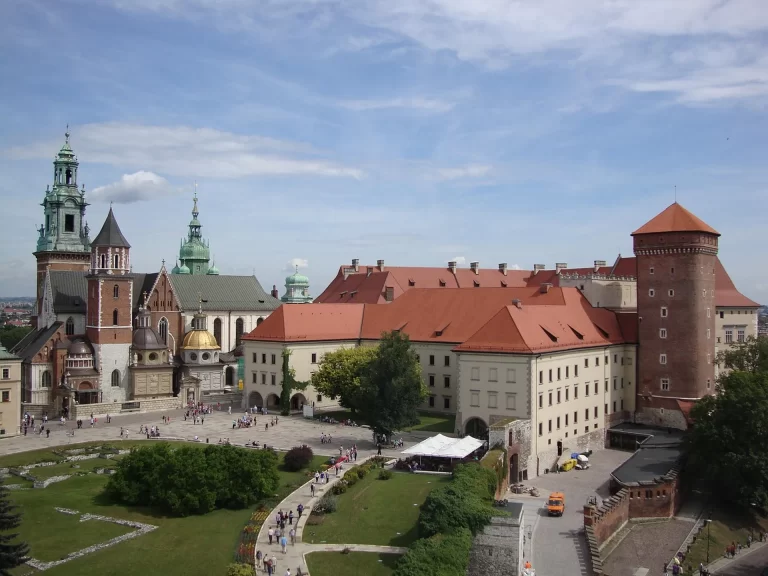
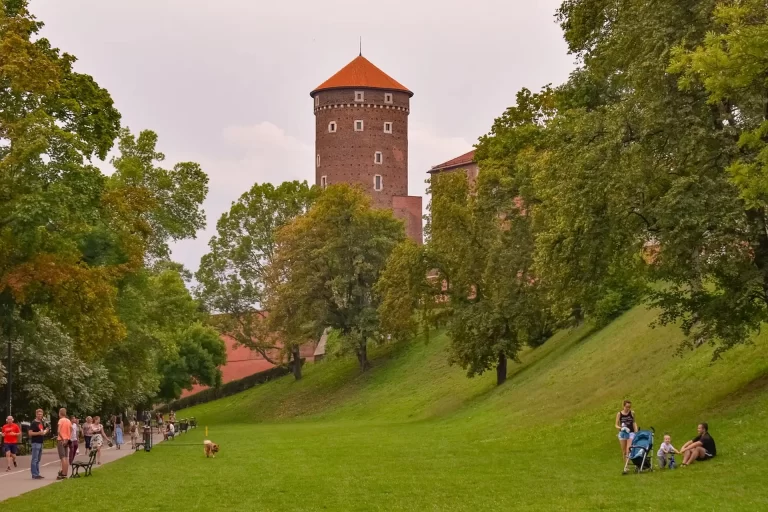
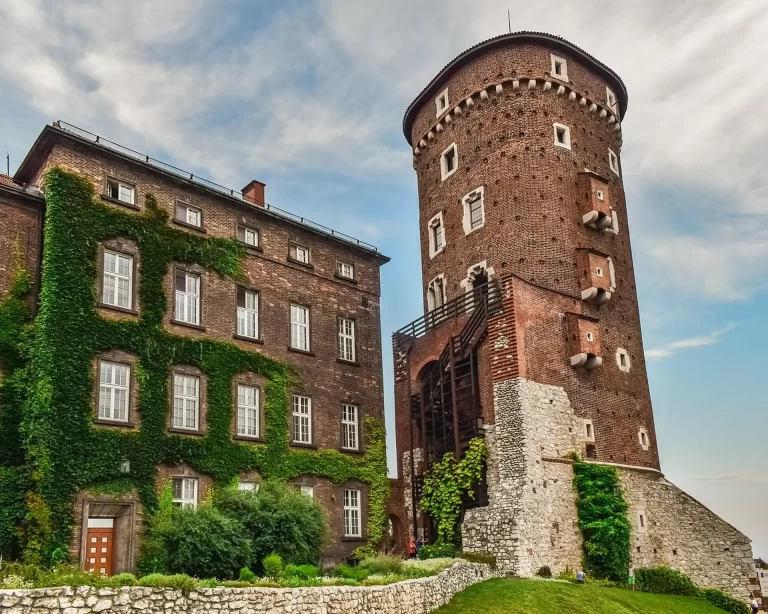
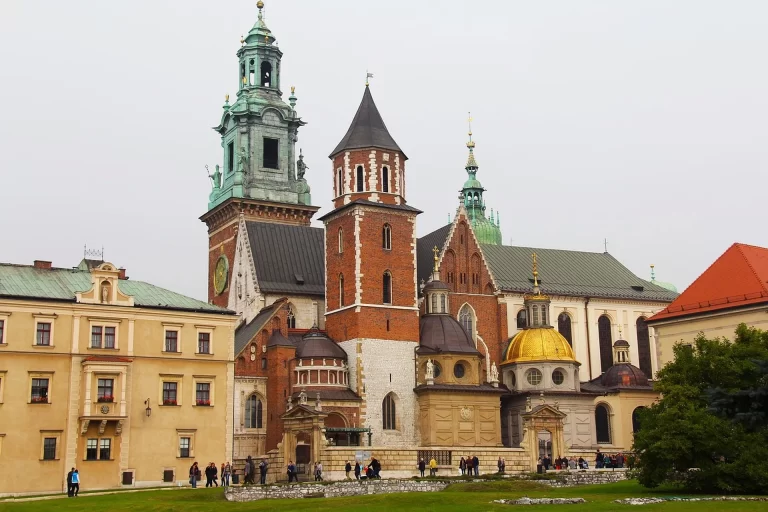
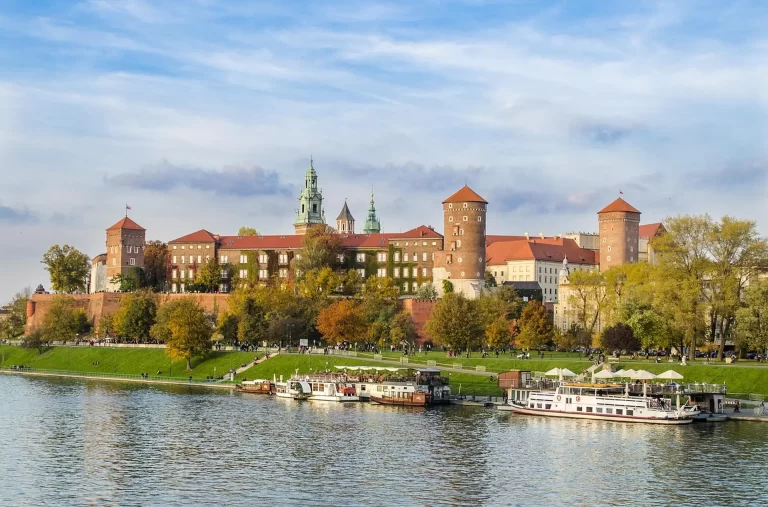
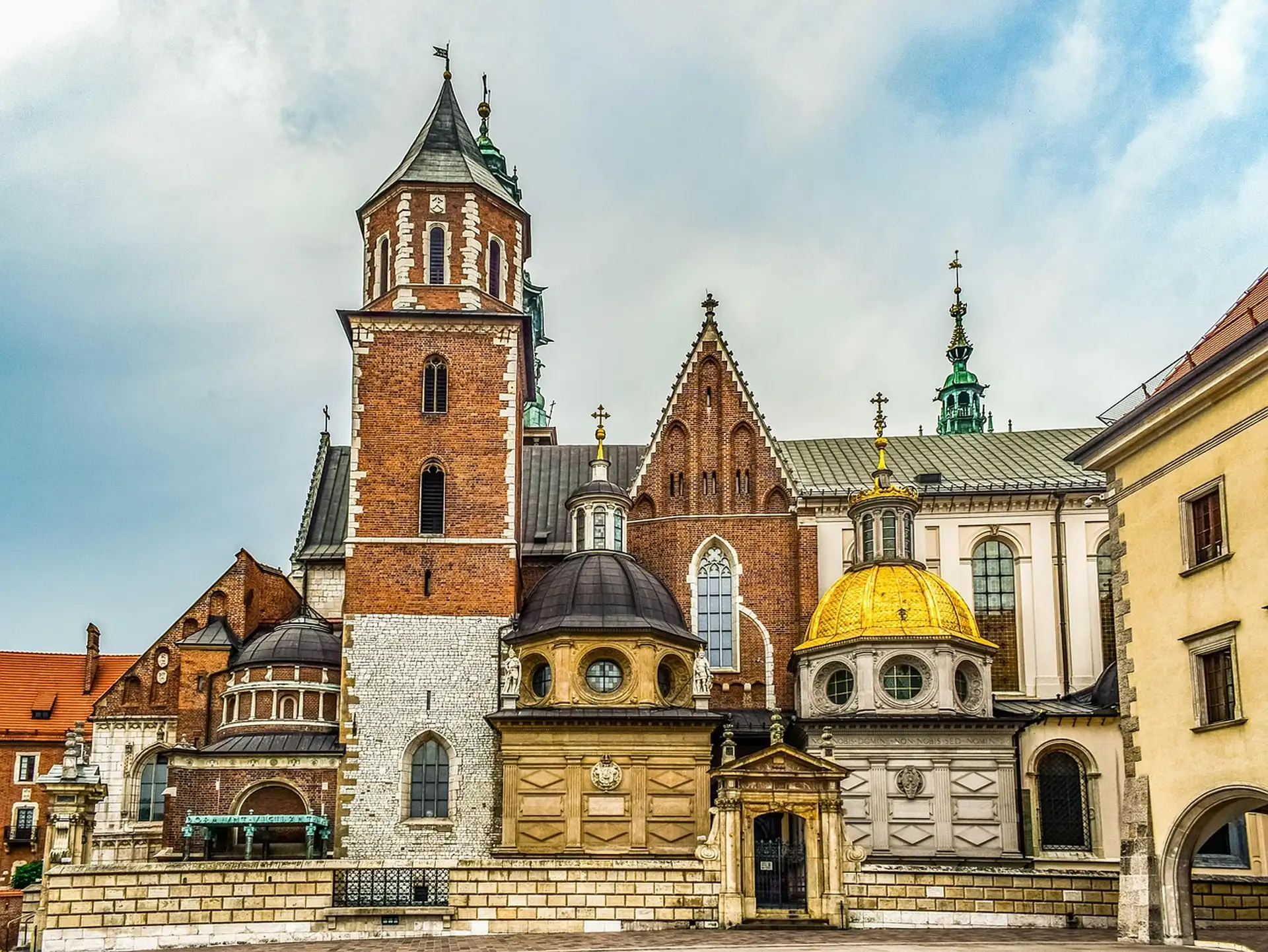
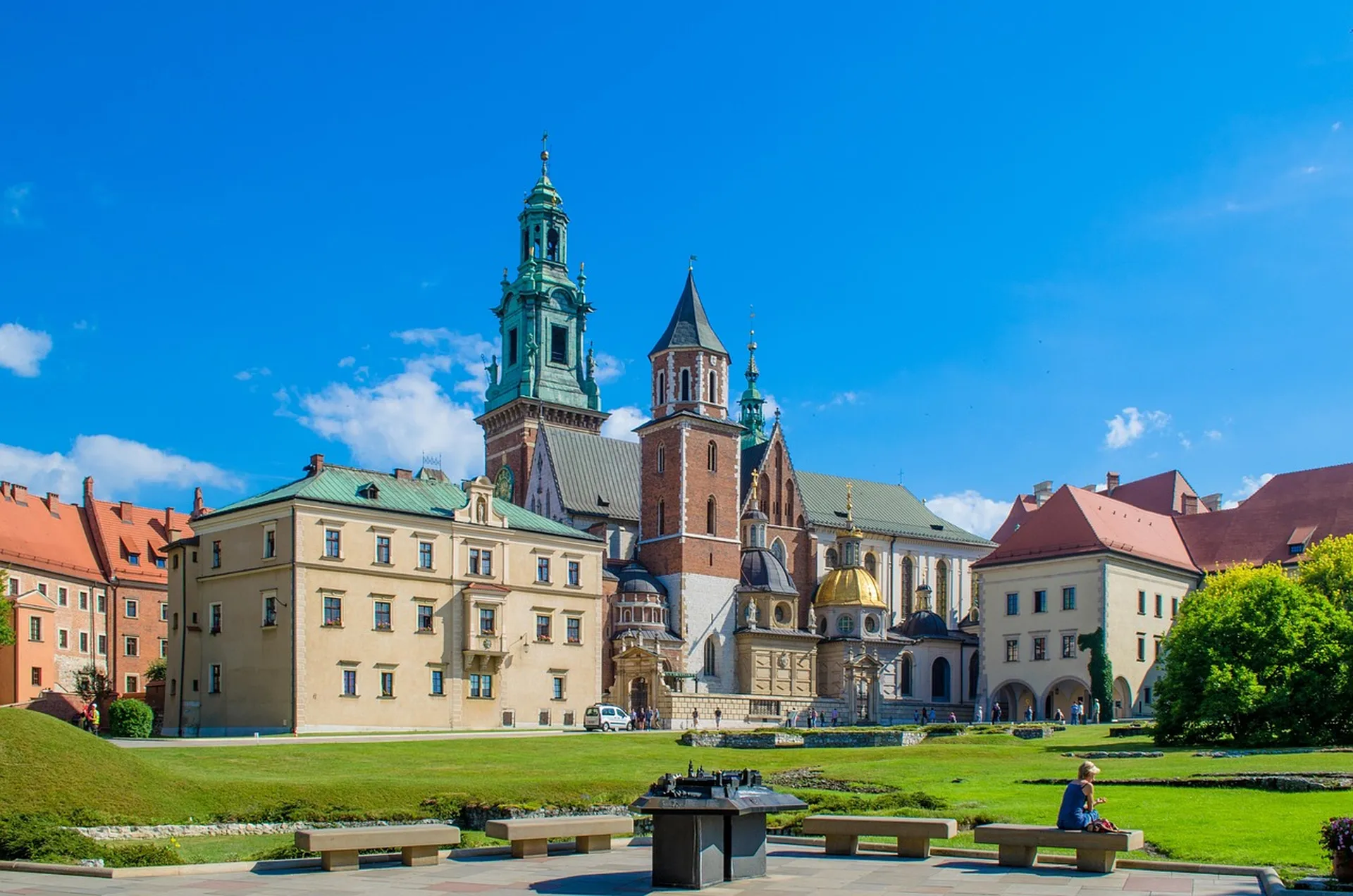
Wawel’s outer courtyards and hillside paths are free to walk, offering views over the Vistula and the exterior of the Cathedral and castle buildings without paying for any interior section. Marta’s breakdown of Wawel’s opening hours explains exactly what’s free versus paid if you want the full picture before you go, but the short version is: the hill itself costs nothing, year-round.
The Vistula Boulevards
Below Wawel Hill, the paved boulevards along the Vistula River are free, flat, and popular with both visitors and locals for an evening walk. The best view of the hill’s full silhouette — castle, cathedral, and the fortified walls together — is from the far bank, reachable via any of several footbridges, and it’s especially worth the walk at golden hour when the stone catches warm light.
Putting It Together as a Route
A logical loop starts at the Main Square, heads north up Floriańska to the Barbican and city walls, joins the Planty for a partial or full loop back around, cuts south past Collegium Maius, continues down toward Wawel Hill for the grounds and views, and finishes along the Vistula boulevards before looping back up into the Old Town. Done at a relaxed pace with stops for photos and coffee, this covers the full list in roughly three hours without repeating ground or requiring any public transport.
What Locals Notice
Krakow residents use most of this list constantly and without thinking of it as sightseeing — the Planty is where people walk to work, the Vistula boulevards are where people jog or meet friends, and Floriańska Street is just the route home from the tram stop for anyone living inside the Old Town ring. That everyday use is part of what keeps these spaces genuinely pleasant rather than feeling like a preserved museum exhibit — they’re a working part of the city, not a backdrop.
If you’d rather have context and stories woven through a free walk like this rather than piecing it together yourself, a guided option covers most of the same ground with narration included — the trade-offs are similar to the ones Marta lays out in her comparison of Wawel’s guided tour versus going alone, and much of that reasoning applies to the wider Old Town walk as well.
See the guided Old Town Walking Tour option
What to Read Next
- Wawel Castle, the Main Market Square and Krakow’s Old Town: The Complete Guide
- Wawel Castle Guided Tour vs Going Alone: What You Actually Get
- Krakow Main Market Square: What You’re Actually Standing In
- The Main Square at Dawn: Why Marta Goes Before the Tour Groups Arrive
- Wawel Castle Opening Hours and Free-Entry Days: The 2026 Reality
Frequently Asked Questions
What are the best free things to see in Krakow’s Old Town?
The Main Square, the Barbican’s exterior, the Planty Park ring, Floriańska Street and St. Florian’s Gate, Collegium Maius’s courtyard, Wawel Hill’s grounds, and the Vistula boulevards below the hill are all free to visit.
Is Wawel Castle free to visit?
The hill’s outer courtyards and grounds are free year-round. Only the interior sections — State Rooms, Royal Apartments, Treasury, and parts of the Cathedral — require paid tickets.
How long does a free walking route through Krakow’s Old Town take?
A full loop covering the Main Square, Barbican, Planty park ring, and Wawel’s grounds takes roughly 2-3 hours at an unhurried pace, longer if you stop frequently for photos or coffee.
Is the Planty Park worth walking?
Yes — it traces the footprint of Krakow’s demolished medieval walls in a continuous green loop around the Old Town, and it’s one of the more pleasant free walks in the city center.
Plan your visit: Google Maps