Schindler’s List Filming Locations Tour: The Sites and the Real Story
A Schindler’s List filming locations tour takes visitors somewhere slightly different from what the film shows, and knowing that gap in advance makes the walk more interesting rather than less. Steven Spielberg shot most of the 1993 film in Kazimierz, Krakow’s real Jewish quarter — not in Podgórze, where the actual wartime ghetto stood, because that area had been redeveloped and no longer looked like 1941. What follows is where the film was really made, what stands in for what, and where the fiction and the real history split apart.
Why Kazimierz, Not the Real Ghetto
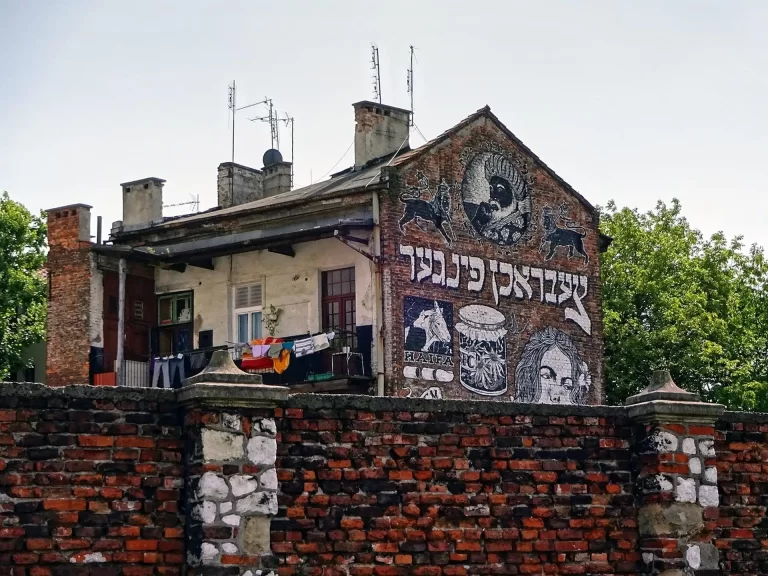
The historical Krakow Ghetto was in Podgórze, across the Vistula from Kazimierz, and by the early 1990s much of it had been rebuilt or altered beyond recognition. Kazimierz, by contrast, had survived largely untouched since before the war — its buildings hadn’t been redeveloped, partly because the district had been neglected for decades. That neglect, ironically, is what made it usable: Spielberg filmed the ghetto scenes in Kazimierz’s real streets and courtyards, standing in for a different neighbourhood a short walk away.
Szeroka Street and the Ghetto Scenes
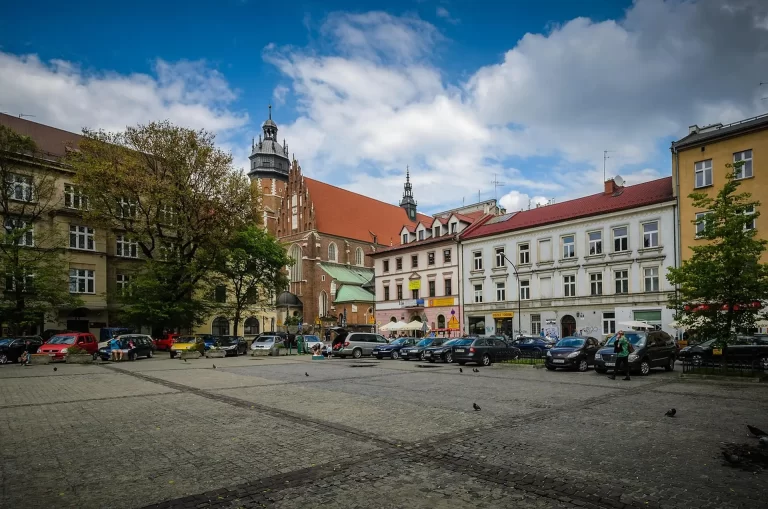
Szeroka Street, Kazimierz’s widest and most recognisable square, plays the fictionalised “Zgoda Square” — the site of registration, the gathering before deportation, and one of the film’s most tense street scenes. Nearby Ciemna Street is where the character Poldek Pfefferberg evades Amon Göth in one sequence. The ghetto-liquidation scenes were filmed around a courtyard at 12 Józefa Street, connecting through to Meiselsa Street near Plac Nowy — all real addresses a visitor can still walk today, largely unchanged since filming.
The Real Schindler’s Factory — Mostly
The factory exterior in the film is the genuine building at 4 Lipowa Street in Zabłocie, virtually unchanged from how it appears on screen. The interior scenes, though, weren’t filmed inside it — production instead used an enamel factory in Olkusz, a town in Małopolska province, because the real building’s condition at the time ruled out interior filming. Visitors touring the actual factory today (now a branch of the Krakow History Museum) are standing in Schindler’s real building, just not in the rooms the camera actually saw.
Płaszów: The Quarry That Became the Camp
Nothing remains of the original Płaszów concentration camp — the site is now an open memorial park, and by the 1990s modern high-rises overlooked where the barracks once stood, making it unusable for filming. Instead, production built a full replica from the original camp blueprints — 34 barracks and 7 watchtowers, with a road paved in Jewish tombstones as the real camp’s had been — in a disused quarry near Krakus Mound, close to the real historic site. Amon Göth’s villa was reconstructed nearby as well, near the location of the real villa on Jerozolimska Street.
What Wasn’t Filmed at Auschwitz
The Auschwitz Memorial authorities did not permit filming inside the actual camp, out of respect for the site and its history. Spielberg was allowed to film only the exterior of the Birkenau gatehouse, from outside, in the town of Oświęcim — every interior arrival, selection and shower-block scene was shot on the same quarry set built for Płaszów. It’s one of the more surprising facts for first-time visitors: the film’s most harrowing sequence wasn’t shot at Auschwitz at all.
A Small Cameo: St. Mary’s Basilica
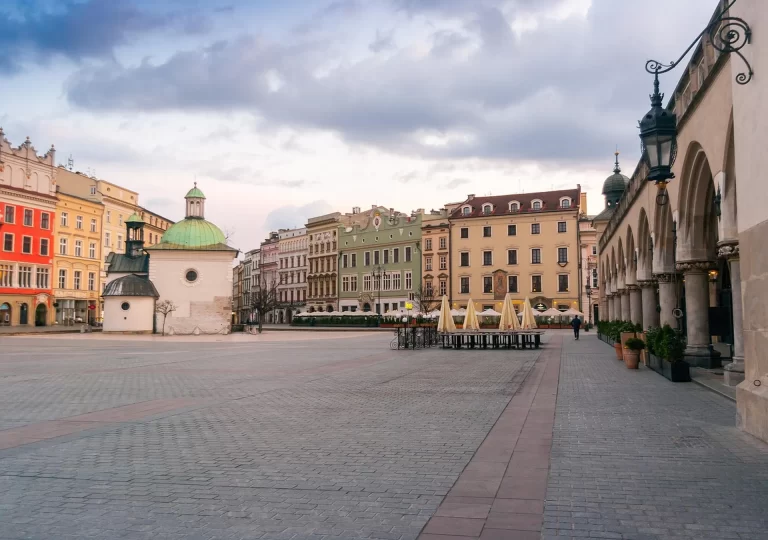
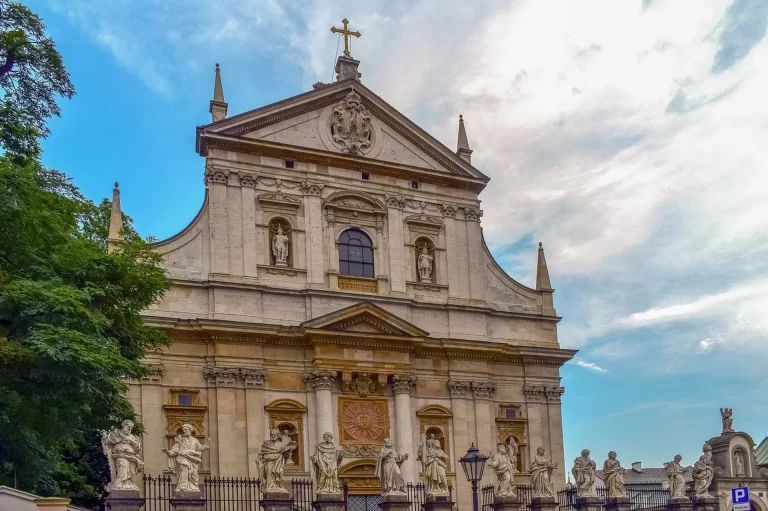
One quieter scene — a clandestine meeting inside a church — was filmed in the real St. Mary’s Basilica on Krakow’s Main Market Square, a building most visitors already have on their itinerary for its own history and altarpiece, unconnected to the rest of the film’s Kazimierz-based locations.
Walking These Streets Today
Most of what the camera saw is still standing and still walkable — Szeroka Street, Ciemna Street, the Józefa-to-Meiselsa route, and the factory exterior in Zabłocie are all a few hours’ walk apart, and most visitors combine them with the broader Jewish heritage of Kazimierz rather than treating film locations as a separate outing. For a guide who can point out exactly which corner Spielberg framed and why, a dedicated Schindler’s List filming locations tour covers the ground more precisely than a self-guided walk, especially since several of the real addresses aren’t marked with any plaque. Those wanting the fuller Jewish-heritage context alongside the film locations are usually better served by a broader Jewish Krakow walking tour, which covers the synagogues and history the film itself only gestures at.
Should You Take a Dedicated Tour or Walk It Yourself
Self-guiding is entirely possible — the key addresses are all public streets, and a printed or phone map is enough to find them. What a guide adds is context a plaque-free street can’t: which building substituted for which, why the production chose Kazimierz over Podgórze, and how the real history diverges from what’s on screen. For visitors mainly curious about the film itself rather than the deeper history, a guided version is worth the couple of hours; for those combining it with a broader Kazimierz walk anyway, self-guiding alongside a good map works just as well.
What Locals Think About the Film’s Legacy Here
Krakow locals have mixed feelings about Kazimierz being known partly through a film rather than through its own seven centuries of history — the synagogues, the market, the pre-war community life. Most don’t resent the connection; the film brought international attention and helped fund preservation work in a district that had been neglected for decades. But locals will often gently redirect a “Schindler’s List tour” question toward the district’s own story, not just the movie’s version of it, which is worth listening to.
Where the Fiction Diverges from the Real History
It’s worth remembering, walking these streets, that the film compresses and relocates real events for narrative reasons — Zgoda Square scenes actually happened across the river in Podgórze, not on Szeroka Street; the Płaszów camp visitors see on screen is a quarry reconstruction, not the actual site; and the Auschwitz arrival never touched Auschwitz’s own ground. None of this makes the film less powerful, but treating its locations as a literal map of 1940s Krakow would be a mistake the buildings themselves don’t support.
Visiting the Real Addresses Respectfully
Several of the filming locations, including the courtyard at Józefa Street, are still ordinary residential buildings where people live today, not sanctioned tourist sites. Visitors are welcome to photograph the exteriors and walk the streets, but should keep voices down and stay out of private entryways — a courtesy that matters more here than at a formal monument, since the people living behind these doors didn’t sign up to be part of a film tour. Szeroka Street and Plac Nowy, by contrast, are public squares with cafés and market stalls, and can be lingered in freely.
The Book Behind the Film
The film was based on Thomas Keneally’s 1982 novel “Schindler’s Ark” (published in some editions as “Schindler’s List”), itself built from interviews with over fifty survivors Schindler had employed. Reading it isn’t necessary before visiting, but it fills in detail the film compresses for runtime — including a fuller picture of Oskar Schindler’s own contradictions, which the film only partly explores. Most visitors who arrive having only seen the film get plenty from the walk regardless; the book rewards those who want more before or after.
What to Read Next
- Jewish Krakow and the Kazimierz Quarter: Heritage, Synagogues and Tours
- Jewish Krakow Walking Tour: What You See, Learn and Where It Goes
Frequently Asked Questions
Was Schindler’s List filmed at the real Auschwitz camp?
No. Filming inside Auschwitz-Birkenau was not permitted. Only the Birkenau gatehouse exterior was filmed on location in Oświęcim; all interior camp scenes were shot on a quarry set built for the Płaszów sequences.
Is the real Schindler’s Factory building shown in the film?
The exterior is the genuine building at 4 Lipowa Street in Zabłocie. The interior scenes were filmed at a different enamel factory in Olkusz, because the real building’s condition ruled out interior filming at the time.
Which Krakow district was used for the ghetto scenes?
Kazimierz, Krakow’s historic Jewish quarter, stood in for the wartime ghetto, which was actually located across the river in Podgórze. Kazimierz had survived largely unaltered, making it usable for filming; Podgórze had been redeveloped.
Where was the Płaszów concentration camp filmed?
Not at the real site, where nothing remains and modern buildings now stand nearby. A full-scale replica camp was built from original blueprints in a disused quarry near Krakus Mound, close to the historic location.
Is a filming locations tour worth booking, or is self-guiding enough?
Self-guiding works well since the key streets are public and unmarked by plaques. A guided tour adds context a plain street can’t — which building substituted for which, and why — which is worth it for visitors mainly interested in the film itself.
Plan your visit: Official site · Google Maps